Kelsey did not speak for six full seconds.
Chapter 2
Kelsey did not speak for six full seconds.
For my sister, that was practically a medical emergency.
Usually, silence never survived near her. She filled every empty space with complaints, explanations, little wounded sighs, or the kind of laughter that made people feel mean if they did not laugh with her.
But after I said the Disney trip was canceled, the line went so quiet I could hear her breathing change.
“What do you mean canceled?” she finally asked.
I looked across my kitchen table at the foil-wrapped roll Max had saved for breakfast.
“I mean canceled.”
“You can’t cancel it.”
“I did.”
“But it was a gift.”
“Yes.”
“For my children.”
“And my son was also supposed to be part of this family.”
Her voice sharpened immediately. “Oh my God, Hannah. This again?”
This again.
A useful phrase in my family.
It made patterns sound like isolated complaints.
It made years of being overlooked sound like a
bad mood.
It made my son’s hurt sound like my inconvenience.
“Yes,” I said calmly. “This again.”
Kelsey laughed, but there was no humor in it. “You are seriously taking Disney away from Ava and Mason because Max had to sit at the kids’ table?”
“Because Max was humiliated while everyone watched.”
“He was not humiliated.”
“He cried in the car.”
“That’s because you made it dramatic.”
My hand tightened around my coffee mug.
There it was.
Not an apology.
Not even curiosity.
Blame.
When a child was hurt in our family, the problem was never the person who caused the hurt. It was always the person who refused to hide it properly.
I said, “Kelsey, did you call to ask how Max is?”
She paused.
Just long enough.
“Don’t change the subject.”
I almost smiled.
“No. That was the subject.”
She exhaled hard. “You are being cruel.”
“That’s interesting.”
“What?”
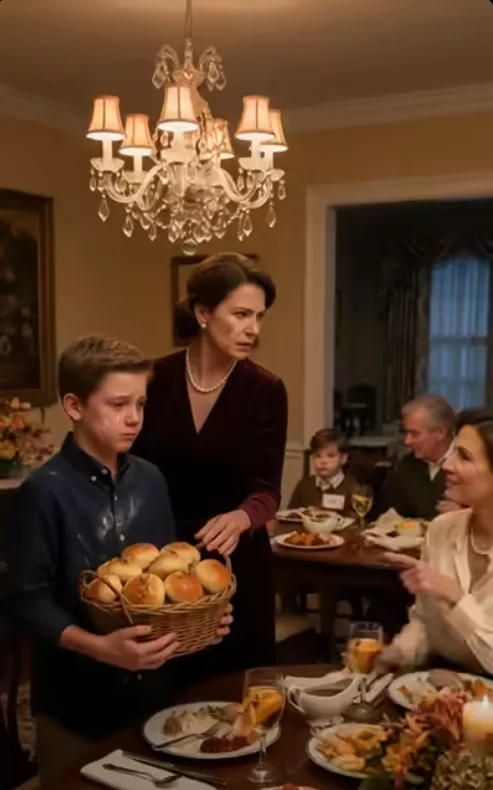
“You had no problem watching Max stand there with a basket of rolls he made himself while you told him he didn’t belong at the adult table.”
“I said he was still a kid.”
“Ava is twelve.”
“Ava is mature.”
“And Max is not?”
“He’s sensitive.”
Sensitive.
Another family word.
It meant he noticed.
It meant he remembered.
It meant their cruelty had consequences they found annoying.
“I’m done,” I said.
“You’re done?”
“With paying for memories my son gets excluded from.”
Kelsey’s voice dropped. “Mom and Dad are going to hear about this.”
A year ago, that sentence would have made my stomach tighten.
Not because my parents had real power over me.
Because I had spent thirty-eight years mistaking their disappointment for a command.
That morning, sitting in my kitchen with refund emails in a folder and my son sleeping safely down the hall, the threat landed
differently.
“Good,” I said. “Tell them.”
Kelsey went silent again.
Then she said, very quietly, “You are going to ruin Christmas.”
I looked toward the hallway where Max’s bedroom door was half open. He had fallen asleep early the night before, exhausted from pretending he was fine.
“No,” I said. “I’m done letting Christmas be another place where my child learns he matters less.”
Kelsey hung up.
I set the phone down.
My coffee had gone cold.
For a few minutes, the house was peaceful.
Then my mother called.
I let it ring.
Then my father.
Then Kelsey again.
Then my mother sent a text.
Call me. You have upset everyone.
I stared at the screen.
Everyone.
Not Max.
Not Hannah.
Everyone.
I typed back:
Then everyone can sit with that feeling.
I put the phone face down.
Ten minutes later, Max shuffled into the kitchen wearing pajama pants and one of my old hospital sweatshirts, sleeves hanging over his hands.
His hair was flattened on one side.
He looked thirteen and eight and older than he should have all at once.
“Was that Aunt Kelsey?” he asked.
I softened my face before turning around.
“Yes.”
“She’s mad?”
“Yes.”
He looked down. “Because of me.”
“No.”
The answer came out so quickly he looked up.
I walked to him and placed both hands on his shoulders.
“Not because of you. Because of her choices.”
His eyes searched mine.
Children who grow up around unfair adults become experts at reading faces. They learn to check whether love is stable before stepping onto it.
I hated that my family had taught him that.
“Did you cancel Disney?” he asked.
I nodded.
His mouth tightened.
Not disappointment exactly.
Confusion.
“But I thought we were all going.”
I swallowed.
That was the cruelest part.
He had still wanted to go.
Even after everything.
Because children love people longer than those people deserve.
“I wanted us all to go,” I said. “I wanted one trip where you and Ava and Mason could just be cousins. No rankings. No weird comments. No adults making you feel like you were visiting someone else’s family.”
He looked at the floor.
“But that’s not what it was going to be,” I said gently. “If they can’t give you a chair at Thanksgiving, I don’t trust them to give you respect in Disney.”
His eyes filled fast.
He tried to blink it away.
I pulled him into me.
He was almost taller than me now, all elbows and shoulders and quiet hurt.
“I didn’t want to be a baby,” he whispered.
“You weren’t.”
“I should’ve just sat there.”
“No.”
His breath shook.
“Leaving felt embarrassing.”
“I know.”
“Everyone looked at me.”
“I know.”
I held him tighter.
“Sometimes leaving feels embarrassing because people expect you to stay and accept it. But leaving was not weakness, Max. Leaving was me choosing you.”
He was quiet for a long time.
Then he whispered, “Nobody ever chooses me there.”
That sentence broke me in a place I did not know could still break.
I kissed the top of his head.
“I do.”
He nodded against my shoulder.
“I know.”
But he said it like he was trying to believe it, not like he fully did yet.
That was what made me certain.
Canceling Disney had not been revenge.
It had been overdue parenting.
By noon, the family group chat exploded.
Kelsey sent the first message.
Hannah canceled our Disney trip because Max got his feelings hurt over seating.
My mother responded almost instantly.
Hannah, this is not okay.
My father added:
You need to fix this. Those kids were counting on you.
Greg, Kelsey’s husband, who had not said one word when Max was humiliated, finally found his voice.
We already told the kids. You can’t just pull something like this.
I read the messages while Max sat at the counter eating scrambled eggs.
He watched me carefully.
“Is it bad?” he asked.
I placed the phone on the table, screen down.
“It’s loud. That doesn’t mean it’s right.”
Then I opened the chat and typed:
I walked out because my son was publicly treated as less than Ava. Nobody at that table corrected it. I canceled the trip because I will not spend $12,000 rewarding a family dynamic that hurts my child.
Kelsey replied immediately.
You are making this about money.
I typed back:
No. You did. You only called me after the money disappeared.
No one answered for three minutes.
Then my mother wrote:
Your sister has always struggled. You know that. You are more stable. We expect more from you.
I stared at that message for a long time.
There it was.
The family constitution.
Kelsey struggled, so I paid.
Kelsey cried, so I softened.
Kelsey needed, so I gave.
I was stable, so I was not allowed to need anything.
Not support.
Not gratitude.
Not even basic respect for my son.
I replied:
Then expect this: I am done funding people who treat my child as optional.
My father called again.
This time, I answered.
He did not say hello.
“You’re going too far.”
“No, Dad. I finally stopped going too far for everyone else.”
He sighed heavily. The old sigh. The disappointed sigh. The one that used to make me feel ten years old and selfish.
“Hannah, be reasonable. It was one dinner.”
“It was not one dinner.”
“You’re upset.”
“Yes.”
“Then calm down before making financial decisions.”
I almost laughed.
“The financial decision is already made.”
“You need to reinstate the trip.”
“No.”
“Kelsey’s kids are devastated.”
“And Max?”
Silence.
I waited.
My father cleared his throat.
“Max is old enough to understand that families have misunderstandings.”
“He is also old enough to understand when adults choose not to protect him.”
“That’s unfair.”
“To whom?”
He had no answer.
So he chose anger.
“You have always been dramatic about that boy.”
That boy.
My son had a name.
A good name.
A name he had written carefully on the little tag attached to the basket of rolls.
Made by Max. Happy Thanksgiving.
I said, “Do not call my son that boy.”
Dad’s voice lowered. “Don’t take that tone with me.”
“There it is,” I said.
“What?”
“You are more offended by my tone than by what happened to your grandson.”
He went quiet.
I heard my mother whispering in the background.
Then Dad said, “Your mother wants to talk.”
“I don’t.”
“Hannah—”
“I need you both to hear me clearly. I will not discuss Disney again. I will not send money for Kelsey’s bills, trips, appliances, utilities, school activities, or emergencies. I will not cover your household repairs either.”
His breath caught.
There it was.
The real panic.
Not Disney.
Access.
“What does that mean?” he asked.
“It means the windows, the insurance gap, the property tax shortfall you mentioned last month — I’m not paying them.”
“Hannah, that is not the same thing.”
“It is exactly the same thing. You all taught me that my value in this family comes from what I provide. I am correcting the lesson.”
My mother came on the line then, voice trembling.
“You would let us lose the house over a chair?”
I closed my eyes.
Even now, they made the chair sound small.
As if a chair had not told my son he was less loved.
As if a chair had not revealed every adult in the room.
“No, Mom,” I said. “You risked the house by depending on a daughter you don’t defend.”
She started crying.
I let her.
For once, I did not rush to patch the wound she opened herself.
After the call ended, I found Max standing near the hallway.
He had heard enough.
Not all.
Enough.
“You paid for Grandpa’s house stuff too?” he asked quietly.
I nodded.
His face changed.
Not hurt this time.
Anger.
Small, young, protective anger.
“But they didn’t even say thank you for the rolls.”
I felt my throat tighten.
“No,” I said. “They didn’t.”
He walked to the counter and picked up the last foil-wrapped roll.
For a second, I thought he might throw it away.
Instead, he opened it, split it in half, buttered both pieces, and handed one to me.
“We can eat it,” he said.
I smiled through tears.
“Yes. We can.”
That evening, Kelsey showed up at my door.
I saw her through the peephole before she knocked.
She was wearing a cream sweater, perfect makeup, and the expression of someone who had rehearsed righteous pain in the car.
Greg stood behind her, arms crossed.
My parents were with them.
Of course they were.
Four adults on my porch because one woman had stopped paying.
Max was in his room doing homework.
I opened the door but left the chain on.
Kelsey looked at the chain first.
Then at me.
“Seriously?”
“Yes.”
Mom’s eyes were red. “Hannah, let us in.”
“No.”
Dad’s jaw tightened. “We are not doing this on the porch.”
“That is exactly where we’re doing this.”
Kelsey stepped closer.
“Ava has been crying all day.”
“Did you tell her why the trip was canceled?”
“I told her you were angry.”
“Then you lied.”
Greg spoke for the first time.
“Look, Hannah, we all get that Max was embarrassed. But you’re punishing our kids for an adult issue.”
I looked at him.
“You sat at the adult table while my son was sent away.”
He shifted.
“That wasn’t my call.”
“No. It was just your silence.”
His face flushed.
Kelsey snapped, “There wasn’t room.”
I opened the door as far as the chain allowed and looked directly at her.
“Kelsey, there were three empty chairs against the wall.”
She froze.
So did my mother.
Because that was the thing.
Everyone had seen them.
Everyone had pretended not to.
Kelsey’s mouth tightened. “Those were for later.”
“For whom?”
No answer.
I nodded.
“For nobody. They were just chairs. And somehow even empty chairs were more welcome than my son.”
My mother whispered, “Hannah…”
I turned to her.
“Don’t. You saw them too.”
She looked away.
Dad said, “Enough. This has gotten out of control.”
“No,” I said. “It was out of control when my thirteen-year-old tried to make this family proud with homemade rolls and got treated like a toddler.”
Kelsey’s eyes flashed.
“You always make Max sound like some poor little victim.”
“He was a child being hurt by adults.”
“He is too sensitive.”
The bedroom door opened behind me.
I went still.
Max stood in the hallway.
Kelsey saw him and immediately softened her voice.
“Max, sweetheart, this is not about you.”
He walked toward me.
Not fast.
Not dramatic.
But steady.
“It is about me,” he said.
Kelsey blinked.
Mom’s face crumpled.
Max looked through the gap in the door.
“I heard you say I couldn’t sit with everyone.”
Kelsey swallowed. “Honey, I didn’t mean it like that.”
“Yes, you did.”
The porch went silent.
My son’s voice shook, but he kept going.
“Ava got a place card. I got plastic forks.”
Kelsey’s face reddened.
Greg looked down.
Max’s hands clenched at his sides.
“I made the rolls because I thought Grandpa would be proud.”
My father flinched.
Finally.
Max looked at him.
“You didn’t even try one.”
Dad opened his mouth.
Nothing came out.
“I’m glad Mom canceled Disney,” Max said.
Kelsey’s eyes widened.
I turned to him, surprised.
He looked up at me.
Then back at them.
“Because I don’t want to go somewhere fun with people who make me feel stupid.”
Nobody spoke.
My mother began to cry quietly.
But Max was not finished.
“And I’m not childish because I cried. I’m childish because I’m thirteen. You’re adults.”
The words landed harder than anything I could have said.
Kelsey’s face changed.
For one moment, shame almost reached her.
Then pride blocked it.
“Max, you don’t understand how much your mother is hurting everyone.”
I stepped forward, but Max spoke first.
“No. I understand now.”
His voice grew steadier.
“She’s the only one who didn’t.”
That was the end.
Not because Kelsey accepted it.
She did not.
Not because my parents apologized.
They did not.
But because my son had named the truth in a way none of them could turn into drama.
I closed the door.
Kelsey shouted my name once.
Dad knocked twice.
Mom cried.
Greg said something low and angry.
I turned the deadbolt.
Max stood beside me, breathing hard.
Then suddenly, he looked scared.
“Was that rude?”
I pulled him into my arms.
“No,” I whispered. “That was brave.”
He held on tight.
Outside, footsteps moved down the porch.
A car door slammed.
Then another.
Then quiet.
Later that night, after Max fell asleep, I checked my email.
The Disney refunds had processed.
Not all of them.
Enough.
I opened a new folder and named it:
Max Fund.
Then I transferred the first refund into a savings account under his name.
The confirmation appeared on screen.
$4,827.16.
It was not a trip.
Not yet.
It was something better.
A beginning.
The next morning, I woke to a text from my mother.
Your father says if you stop helping with the house, we may have to sell. I hope you can live with that.
I looked at the message for a long time.
Then I typed:
I can.
And for the first time in years, I meant it.
Chapter complete
You have reached the end of this chapter.
Continue reading
A few more worlds to get lost in after this chapter.




