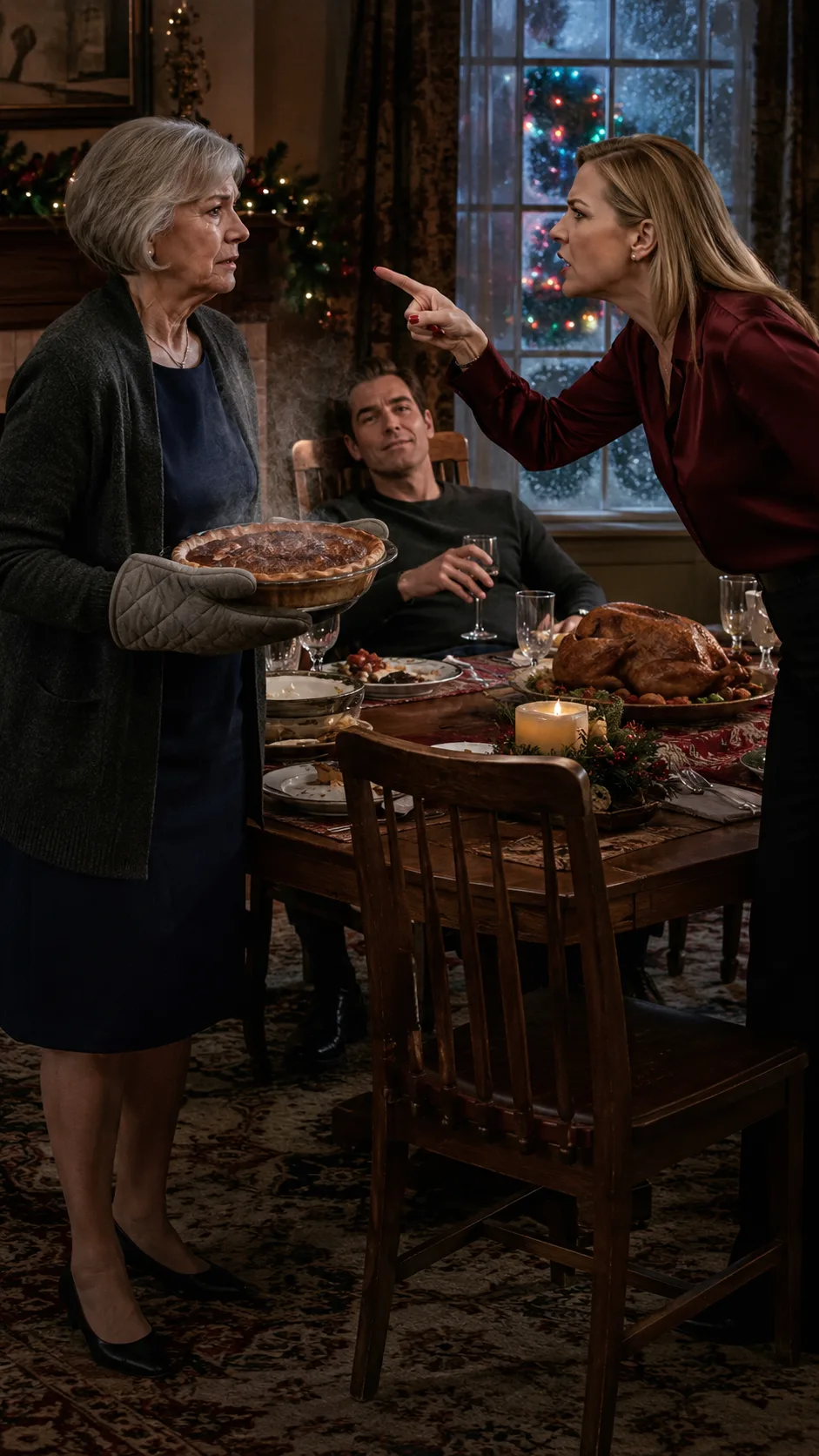
The court papers reached Garrett and Celeste forty-eight hours later.
Chapter 3
The court papers reached Garrett and Celeste forty-eight hours later.
Garrett called from another unknown number before breakfast.
“What the hell did you do?”
I placed my tea on the table and watched a cardinal land beside the feeder in my backyard.
“I enforced the agreement you signed.”
“You’re taking our house?”
“My house,” I corrected. “Ownership returned to me when you charged me rent and forced me to leave.”
“That clause cannot be real.”
“It is real enough for the court.”
His anger cracked, revealing panic.
“We already have a realtor. We need the money from the sale.”
“Then explain why you listed property you do not own.”
“Mom, please. We made a mistake.”
“A mistake is forgetting an appointment. Your wife planned my eviction. You sat in your father’s chair, smiled, and told me to see how I would survive.”
“We have children.”
“So teach them what consequences look like.”
He called me heartless and accused me of
revenge.
“Cruel was taking more than sixty thousand dollars from me while I slept in an unheated garage,” I said. “Cruel was humiliating me on Christmas after I cooked your dinner. I am not destroying your family. I am simply no longer financing it.”
I ended the call.
The court hearing took place two weeks later. Daniel represented me, so I did not attend. Garrett and Celeste hired a lawyer, but no argument could erase their signatures or Celeste’s written demand for rent.
The judge ruled that the agreement had been violated.
The property returned to me.
They received thirty days to leave.
For several nights, I expected guilt. I imagined Garrett packing boxes and the grandchildren leaving their rooms.
But guilt never came.
I had not taken something belonging to them. I had reclaimed what they lost through greed.
My attorney supervised everything. I made certain they had time
to find another home. I wanted justice, not spectacle.
By the end of February, the house was empty.
Daniel sent photographs. The oak dining table Philip had built still stood beneath the chandelier.
I remembered our first Christmas there. Garrett had been six, asleep beneath the tree while holding a toy train.
I allowed myself to grieve that child.
Then I stopped confusing him with the man he had become.
I listed the property for sale. Eight days later, a young couple named Hannah and Luke visited. They were expecting their first baby. Luke touched the oak table and asked whether it could remain.
“My husband made it,” I said.
“We would protect it,” Hannah promised.
I believed her.
Their offer was not the highest, but I accepted it. The house needed people who understood that a home was more than an asset.
After the mortgage Garrett had taken against
the property and all fees were paid, the sale left three hundred eighty thousand dollars.
I kept none of it.
Some went to the shelter where I volunteered. Some funded temporary apartments for elderly people escaping abusive relatives. Some paid for legal aid for parents manipulated into signing away property. The rest supported food programs and nursing scholarships.
When Daniel handed me the donation receipts, I placed them in the envelope that once held the proof of my wealth.
Something painful had become useful.
Months passed.
My weeks developed a peaceful rhythm. Book club on Tuesdays. Watercolor class on Wednesdays. Volunteering on Thursdays and Fridays. Saturdays belonged to coffee, flowers, and novels beside my reading chair.
My friend Norma came from Florida and stayed for two weeks. One evening, we sat on the back porch watching the sunset.
“Do you regret it?” she asked.
“Sometimes I wonder whether I should have given Garrett another chance.”
“You gave him three years of chances,” she said. “Every grocery bill was a chance. Every insurance payment was a chance. Every night in that garage was a chance for him to remember you were his mother.”
I looked toward the maple tree.
“You didn’t punish him,” Norma continued. “You stopped volunteering to be hurt.”
Those words stayed with me.
Garrett never called again after the court ruling. Neither did Celeste or the grandchildren. Their silence once would have broken me. Now it proved that what they missed had never truly been me.
They missed the money.
The free labor.
The woman who kept giving because she believed love could be earned through sacrifice.
I no longer believed that.
Love without respect is not love. Family without kindness is only blood. Generosity without boundaries becomes permission for selfish people to take everything.
I had spent years shrinking myself so Garrett’s family could feel larger. I saved while they spent. I lived beside a space heater while they complained I occupied too much room.
The night Celeste ordered me out, she believed she was removing a burden.
Instead, she released me.
I became Rhonda again—not Garrett’s bank account, Celeste’s maid, or the silent grandmother at the end of the table.
I was a retired nurse, Philip’s wife, Norma’s friend, a painter, a reader, a volunteer, and a woman still capable of building a future at sixty-eight.
On the next Christmas morning, I woke in my warm bedroom. Snow covered the backyard. The fireplace glowed. A small pecan pie cooled on the counter.
This time, I had baked it for myself.
Friends from my book club arrived carrying wine, flowers, and too much food. We laughed around my dining table until evening.
When I served the pie, someone thanked me.
Such a simple thing.
Yet it reminded me how little I had once accepted and how much dignity I had recovered.
Nobody told me I was taking up space.
Nobody demanded money.
Nobody asked how I would survive.
I already knew the answer.
I would survive beautifully.
And I would never again apologize for choosing myself.
THE END
Chapter complete
You have reached the end of this chapter.
Continue reading
A few more worlds to get lost in after this chapter.




