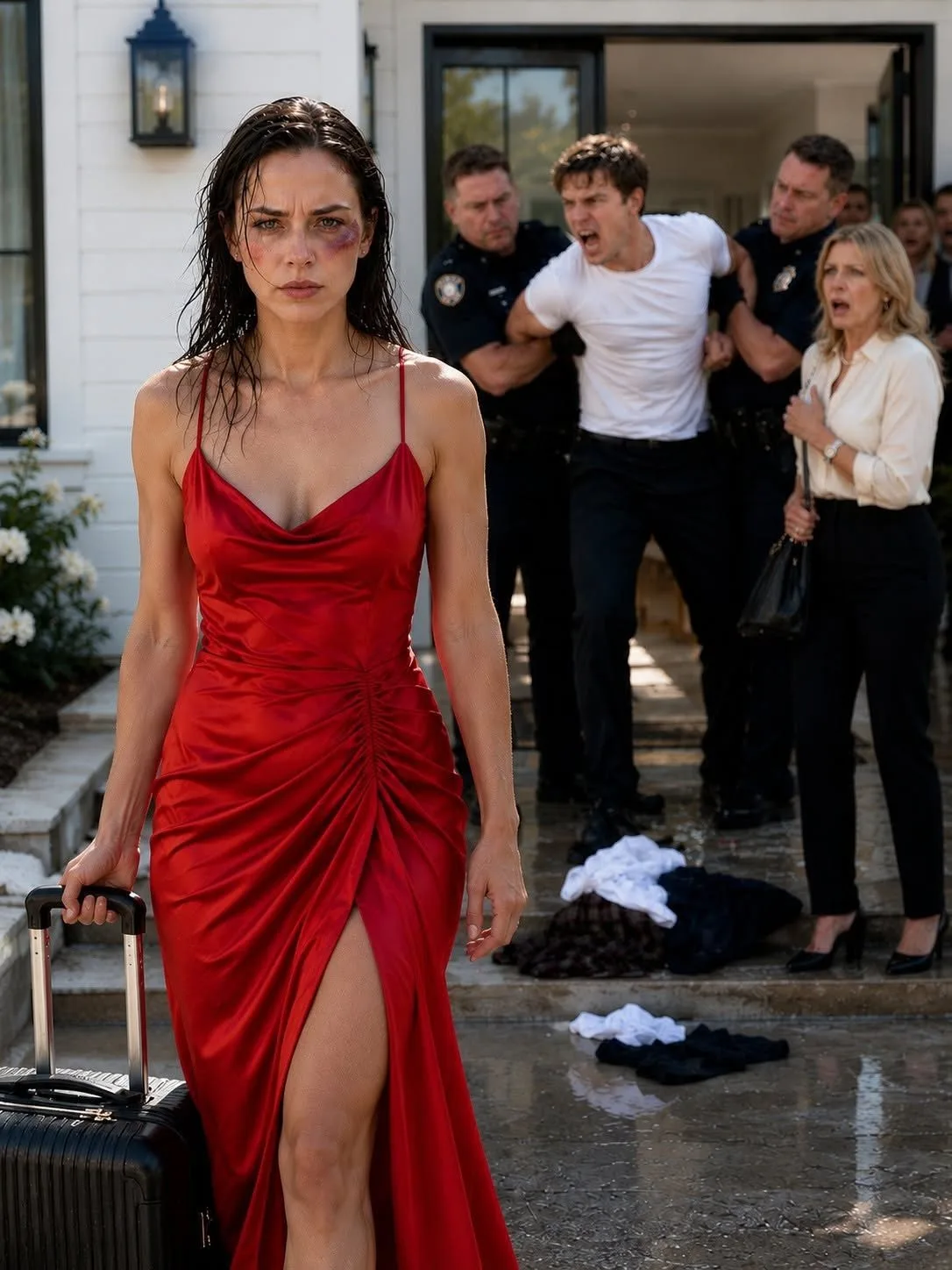
The encrypted drive was not valuable because it contained more evidence against Randy.
Chapter 4
The encrypted drive was not valuable because it contained more evidence against Randy.
Almost everything on it had already been copied.
What made it dangerous was a single audio file I had never uploaded.
Three months earlier, I had come home early and heard Eden speaking to Randy in the kitchen. I left my phone recording from the hallway while I pretended to take a shower upstairs. Their conversation had been difficult to understand because the dishwasher was running, and I had never found time to clean the audio.
The original remained on the drive.
At the time, I thought it was just another argument about my townhouse.
Now I was not so sure.
The detective ordered me not to return home. Dad agreed before I could object.
“You have spent enough years walking into danger because someone told you not to make a scene,” he said. “This time, let professionals make the scene.”
At 4:48 that afternoon, detectives entered the townhouse after
surveillance showed movement inside.
They found Eden in my upstairs office.
She had removed the back panel from a desk drawer and was searching the compartment where I used to keep tax backups.
She was not carrying the encrypted drive.
Because it was no longer there.
I had moved it months earlier into the false bottom of my mother’s wooden jewelry box.
The same box I packed the morning I left.
When the detective told me, I sat on the edge of the hotel bed and laughed for nearly thirty seconds.
Not because anything was funny.
Because Randy had spent years mocking what he called my paranoid little systems—duplicate backups, sealed folders, redundant records, two-factor authentication on everything.
Those habits had just protected the one file Eden was willing to violate a court order to retrieve.
The drive was turned over to investigators that evening.
By midnight, a technical specialist
had cleaned the old kitchen recording.
At 12:37 a.m., the detective called and asked whether Dad and I could come to the station.
We listened in a small interview room.
First came the dishwasher. Plates knocking together. Water rushing.
Then Eden’s voice emerged through the noise.
“You should have handled Joanna before this became a property problem.”
Randy answered, “She won’t sign.”
“She signed everything else eventually.”
“Not the house.”
A pause.
Then Eden said, “Her mother was difficult too.”
Dad beside me went rigid.
Randy laughed nervously. “You keep saying that like I knew her.”
“You didn’t have to. Her father learned what happens when you start asking questions.”
Another pause.
Randy lowered his voice. “You said nobody got hurt.”
“I said nobody you need to worry about.”
The recording ended there.
No confession.
No dramatic admission that Eden had caused my mother’s illness or the disappearance of Dad’s
confidential source. Life rarely hands over truth that neatly.
But the words linked Eden to knowledge she had no legitimate reason to possess. Combined with the ledger, the shell companies, the storage unit, and the old consulting payment, investigators had enough to reopen questions buried for years.
Dad sat staring at the table.
I reached for his hand.
He held mine so tightly it hurt.
For once, I did not pull away from pain because I knew the difference between harm and grief.
Over the next six weeks, everything happened at once.
Randy was charged with assault and several financial offenses tied directly to my identity. Prosecutors later added conspiracy-related counts after investigators confirmed he had knowingly prepared false income documents for accounts linked to Bellwether.
Eden faced a much larger case. The storage unit led investigators to additional victims, dormant entities, falsified loan applications, and records suggesting she had manipulated vulnerable people for years. The older allegations connected to my mother and Dad’s corruption case required a separate investigation, and no one promised us where it would lead.
For the first time, I was okay with not having every answer immediately.
I had spent years believing safety would come only when I could predict Randy’s mood, Eden’s demands, or the exact words required to keep a room calm.
Real safety turned out to be different.
It was a locked door he had no key to.
A court order with my name on it.
A phone that did not contain thirty apologies I never owed.
And people who believed evidence more than charm.
Randy asked to speak with me once through his attorney.
I declined.
Then he wrote a letter.
I did not read it.
My attorney did.
She told me the letter contained remorse, explanations about Eden, memories from our first years together, and repeated claims that he had loved me.
“Do you want it?” she asked.
“No.”
That answer surprised me with its ease.
For months, I had imagined that leaving would require one final conversation in which Randy finally understood what he had done. I thought closure meant extracting an admission from him powerful enough to repair the damage.
But closure was not something Randy could give me.
If I needed his understanding to move forward, he still controlled the door.
So I stopped waiting for him to open it.
The divorce moved quickly because the financial evidence made several disputes impossible to sustain. The townhouse remained mine. Randy’s claim against it disappeared. My fraudulent debts entered formal dispute and recovery processes. My employer placed me on temporary leave, then offered a flexible return when I was ready.
Dad stayed nearby longer than necessary.
At first he invented reasons. A hearing. A meeting with an old colleague. Paperwork he needed to organize.
Finally, one Saturday morning, I handed him coffee and said, “You know you’re allowed to say you don’t want to leave yet.”
He looked embarrassed.
“I don’t want to leave yet.”
“Good.”
We rebuilt slowly.
Not by pretending the five lost years had not happened, but by talking about them. I admitted how angry I had been when he criticized Randy. Dad admitted his warnings had sometimes sounded like commands because fear made him controlling in ways he had not recognized.
“I thought if I pushed hard enough, you’d see what I saw,” he told me.
“And I thought if I resisted hard enough, I was proving I was independent.”
He nodded. “We were both stubborn.”
“That part might be genetic.”
He laughed.
It was the first easy laugh between us in years.
Three months after the day Randy threw the makeup bag onto my bed, I returned to the townhouse permanently.
I changed the locks.
I replaced the bedroom dresser.
I painted the kitchen a warm white Eden once said was impractical.
Then I stood in the living room holding the makeup bag.
The police had released it after documenting it.
For weeks, I did not know what to do with it. Throwing it away felt too simple. Keeping it felt worse.
So I took it to a local domestic violence advocacy center along with a donation.
I did not tell them my whole story.
I only said, “There was a morning when someone told me to cover what he had done and smile for lunch. I want this gone, but I want the lesson to stay.”
The counselor looked at me for a long moment.
Then she said, “What lesson?”
I thought about Randy’s polished cuff links. Eden’s colonial house. The forged loans. My father waiting in the living room. The detectives walking through my front door. The years I spent mistaking endurance for strength.
Finally, I answered.
“That hiding the bruise never fixes the hand that caused it.”
Six months later, Eden accepted a plea agreement on multiple financial charges while separate investigations continued into older conduct. Randy entered his own plea on assault and fraud-related counts. I did not attend either hearing.
Instead, that morning, Dad and I drove to the cemetery where my mother was buried.
He brought yellow roses.
I brought the final court order dissolving my marriage.
We stood there without speaking for a while.
Then Dad touched the edge of the headstone and said, “Your mother would have been proud of you.”
I looked down at the paper in my hand.
“No,” I said softly. “I think she would have been proud that I finally stopped trying to make everyone else comfortable with my pain.”
Dad nodded.
The wind moved through the trees above us.
For years, I thought the most important moment of my story would be the day someone powerful arrived to rescue me.
It wasn’t.
My father’s return mattered. The detectives mattered. The evidence mattered.
But the real turning point had happened at 7:43 that morning, one minute after Randy walked out the door.
It was the moment I looked at the makeup bag, looked at my reflection, and decided I would not cover the truth for him anymore.
Everything that came after began with that decision.
THE END.
Chapter complete
You have reached the end of this chapter.
Continue reading
A few more worlds to get lost in after this chapter.




