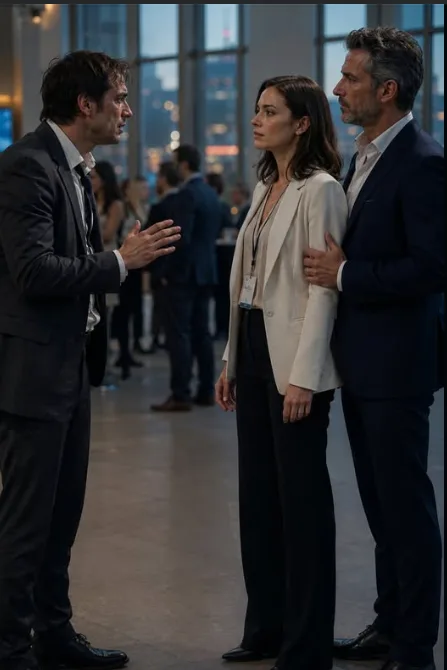
He Chose His First Love on My Birthday—So I Quietly Disappeared
I did not expect fireworks.
Chapter 1
He Chose His First Love on My Birthday—So I Quietly Disappeared
I did not expect fireworks.
Just a call, a simple message, a voice note. Even a lazy happy birthday tossed my way over coffee would have been enough.
But the silence was new.
I woke up to it, thick and heavy, curling around the sheets like fog. The kind that seeps into your lungs before you realize you are breathing it in. The apartment, which had once felt warm and ours, now felt like a rental: temporary, hollow.
I glanced at the clock. It was 3:00 a.m. Daniel was usually up by dawn. Even when he traveled, he texted early, especially on days like this. I reached for my phone, sleep still tugging at my eyes.
Nothing.
No message. No missed call. No voicemail.
I refreshed my inbox instinctively. Nothing there either.
I sat up slowly, letting the silence settle around me. My slippers found the wooden floor. The kitchen hummed faintly, the refrigerator the
only sign of life.
I did not cry. I told myself it was early.
But my birthday had always been a soft day for me. Not flashy. I did not throw big parties or make elaborate plans. I never asked for anything except his time. One day a year, I wanted to feel seen. Not as someone’s partner, or assistant, or project. Just as me.
I padded into the kitchen, already anticipating the possibility of some surprise. Maybe a note. Flowers. A hidden message.
Nothing.
Only the tulips I had bought myself the day before. White ones. My favorite. A little wilted.
I made coffee the way I always did. Two mugs. One out of habit.
He was not there.
Daniel had left 2 days earlier for what he claimed was a business retreat, some vague investor meeting in Prague or maybe Lisbon. I honestly could not remember which. He
had been cagey about the details. He said there would not be Wi-Fi, but he would call when he landed.
He never did.
And now, on my birthday, I was alone in our apartment drinking lukewarm coffee, wondering how long I had been pretending his absence was normal.
At 10:15 a.m., I finally checked Instagram. Not because I wanted to find anything, but because I had to do something. The first few scrolls were innocent enough: a former co-worker’s baby photo, a dog wearing a party hat, some influencer in Santorini.
Then there was a quick, blink-and-you-miss-it story from someone I did not even follow. A woman I vaguely recognized from an event Daniel and I had attended the year before. She had tagged a resort, a beachfront villa in Mykonos.
And there, faint in the reflection of a wine glass and a sunlit window, was Daniel’s watch.
Black leather.
Silver face. Engraved back.
I knew that watch better than I knew most people.
And I knew that smirk, too. Not posed, not hidden, just careless. Just him, caught in a moment he did not think I would see.
He was supposed to be at a summit in Europe. He was supposed to be pitching new software models. He was supposed to be working.
Not drinking sangria with a woman in Mykonos.
Not today.
Not on my birthday.
It was strange, the way time moved after that. The image disappeared. Probably deleted. Maybe she realized. Maybe he told her. Or maybe she simply did not care.
But I had seen enough.
I did not throw my phone across the room. I did not fall apart. I did not call my best friend or scroll through every woman’s profile he had ever liked.
I just sat.
And the coffee grew cold in my hands.
Around noon, my mother called.
“Happy birthday, sweetheart.”
Her voice was cheerful, warm, hopeful.
I forced a smile.
“Thanks, Mom.”
“Are you 2 going out tonight? I hope he’s planning something nice.”
I hesitated, then lied.
“Yeah. I think so. He’s planning something low-key.”
She sighed with relief.
“Good. You deserve it. You’ve always been too quiet about your celebrations.”
I bit my tongue. I did not say what I wanted to.
That I was sitting on our couch, still in my robe, with mascara from the night before smudged under my eyes. That the man I had built 6 years of dreams with was likely half-naked in a Mediterranean villa sipping cocktails with someone who was not me.
That I had not even gotten a happy birthday.
After the call, I cleaned the apartment.
It sounds stupid, but it felt necessary. As if, if I could just make the place look right, maybe something else would fall back into place, too. I scrubbed the sink, washed the bedsheets, threw out half-used candles and old magazines.
Every time my phone buzzed, my heart jumped.
But it was never him.
An email from a clothing store. A notification from the food delivery app. A birthday coupon.
Nothing from Daniel.
By 5:00 p.m., it was starting to sink in. Not just that he was not going to call, but that he did not forget.
He chose not to remember.
Around 6:00, the sky turned gold. I sat by the window, watching people pass on the sidewalk below, arms linked, laughing, heading to dinner reservations and birthday celebrations and dates that felt fresh and tender.
I used to look like that once.
A knock at the door startled me.
I opened it to find a delivery man with a small white box.
“For Clara Vance?” he asked.
“Yes.”
He handed it over.
“Paid in advance. No note.”
I did not even feel surprised anymore.
Inside was a single cupcake. Red velvet. My favorite. One candle, unlit.
I stood there, box in hand, wondering whether it was a peace offering or a form of mockery. Whether it was from him, or from someone else trying to cover up for his absence.
I closed the box, put it in the fridge, and never ate it.
The rest of the evening passed in a haze. I did not check his location. I did not stalk her page. I just let the day end quietly, like the last page of a chapter I had not even known I was writing.
At midnight, I got up from the couch, walked into our bedroom, and opened the top drawer of my nightstand. I pulled out the photo strip we had taken years earlier in Paris. Goofy smiles. Crooked kisses.
Then I pulled out the notebook I used for my sketches.
For the first time in months, I picked up my pen.
The first words I wrote were simple.
He didn’t forget. He just didn’t care.
When people talk about love that spans years, they speak in absolutes, as if it is a steady climb upward. A logical progression from dating to domesticity, with shared Netflix accounts and toothbrushes by the sink.
But no one talks about the slow fade. The erosion. How the very foundation you trusted to hold your weight starts to crack in places too quiet to notice.
That was what happened with Daniel and me. Not a single dramatic collapse. Just decay. Silent, gradual, invisible to the untrained eye.
We met at a tech conference in San Francisco, both pretending to be more confident than we actually were. I was a UX researcher, fresh out of grad school. He was a rising product manager at a fast-scaling startup. His badge had a gold stripe. Mine was plain blue.
He made me laugh within 5 minutes. That alone felt rare enough to spark something.
He said I had quiet magnetism, and at the time I thought that was poetry. Now I think it was code for you won’t challenge me.
Our first year was soft. He sent good morning texts and left little notes in my bag when I had long days. We shared ramen in tiny restaurants and planned imaginary vacations we could not afford yet.
He introduced me to his friends early, and they loved me. They called me grounding, as if I were some kind of stabilizer in his otherwise chaotic world. They did not say it outright, but I could tell. Daniel was the high-flier, the loud one, the man with plans so big he never quite stayed still.
And I was the one who made it all feel stable.
At the time, I took pride in that.
Now I see the danger.
The cracks did not show until year 3. It was subtle. A missed date night here. A forgotten story there. I would tell him something, and a week later he would act as if it were news.
I brushed it off. He was building something. Startups were stressful. The man barely had time to eat, let alone remember every conversation. Besides, was that not how mature relationships worked? You gave space. You held down the fort. You did not make a fuss.
By year 4, I stopped talking as much.
Conversations turned into briefings. He would come home from the office and collapse onto the couch, scrolling while I recapped my day in bullet points just to make it digestible.
When I tried to talk about feelings, he reached for logic.
“You’re just overthinking it,” he would say. “I don’t know what you want me to do differently.”
Maybe I did not know either.
I only knew that it felt like we were cohabiting a memory of love rather than the real thing.
Year 5 was when I first met her.
Her name was Tessa. She was just a client then, a tall, striking woman with cold eyes and a silver laptop who joined 1 of Daniel’s partnership meetings as a representative from a major investment firm.
I had stopped by his office to drop off lunch. Daniel introduced us.
She smiled too tightly.
“You’re Clara?” she asked, as if my name had been a puzzle piece that did not quite fit.
That night, Daniel said, “She’s intimidating, isn’t she? But she respects results. I like that.”
I did not think much of it at the time.
Now, I wonder if that was the first breadcrumb.
By year 6, we were engaged.
A quiet proposal. No cameras. No family. Just the 2 of us in our apartment over takeout containers and cheap wine.
He did not even kneel.
He just said, “We should do this. It’s time.”
I said yes.
Not because I felt certain, but because I felt exhausted. I had invested so much. Six years. Hundreds of tiny compromises. The life we were supposed to build.
Was that not just around the corner?
Surely, this was the reward. It had to mean something.
But instead of planning a wedding, we drifted. I asked about venues. He said we should elope. I talked about rings. He rolled his eyes.
“It’s just jewelry, Clara. Don’t be sentimental.”
I started sleeping with my back turned to him. Not because I was angry, but because I did not feel welcome anymore.
My friends noticed. Emily, my closest friend from college, pulled me aside 1 night after dinner.
“Are you okay?” she asked. “You’re quieter.”
I laughed.
“I’ve always been quiet.”
“Yeah, but this feels different. Like you’re trying not to say the wrong thing.”
I looked down at my wine glass.
“It’s just stress,” I said.
We both knew it was not.
The final 6 months were a blur. Daniel traveled more. Business expansion, he claimed. Always vague. Always last minute. And when he was home, he was elsewhere.
His phone was suddenly locked with a new passcode. He never left it unattended. Sometimes he took calls in the bathroom.
Once, I caught a text flashing across his screen before he quickly turned it face down.
Tessa: Miss you already.
I said nothing.
Not out of fear.
Out of certainty.
Because the moment I opened that door, there would be no going back.
And I was not ready yet.
That brings us back to my birthday. The culmination of everything.
Because deep down, I think I knew.
When I woke up that morning, I did not expect him to be there. But I expected something. Some tiny trace of the man I once knew. The 1 who left love notes and remembered my favorite kind of cake.
Instead, I got a photo from a stranger’s story.
A shadow of a man sipping wine beside the very woman I had been quietly battling in my own mind for months.
And that was when the illusion broke.
Not just of him.
Of me.
I was not the grounded one anymore.
I was the forgotten one.
And I was not going to play that role again.
The next morning did not begin with drama. No shattered glass. No suitcases flung open in fury.
It began with a list.
I made it while sipping black coffee, the way Daniel liked it: bitter, efficient.
Except this time, the list was not about groceries or work to-dos.
It was about my escape.
The apartment lease was joint, but the deposit was mine. I called the landlord and asked what the penalty would be if I terminated it early.
“None,” he replied. “You’ve been here 6 years. You can leave with 30 days’ notice or buy him out.”
I chose neither.
I would vanish.
I logged out of all social media. Then I did not just deactivate my accounts. I deleted them. Every memory, every tagged photo, every trace of my existence online with Daniel. It felt surgical. Necessary.
I imagined him trying to look me up weeks from now and finding nothing, as if I had never existed.
I opened the closet and faced the life I had built with him. Neatly folded sweaters. Concert hoodies. Dresses we had picked out together for date nights that now felt manufactured.
Everything went into boxes.
Clothes. Keepsakes. Anniversary cards. Our Paris photo booth strips.
Stuffed and sealed.
I did not cry. I did not linger. There was no point mourning a life I had quietly stopped living months earlier.
I donated half.
Sold the rest.
Took only what I needed: essentials, sketchbooks, a worn travel journal, my grandmother’s bracelet, a copy of Rainer Maria Rilke’s Letters to a Young Poet, and 1 black duffel bag.
Rome came to mind almost instantly. Not because I had a connection there, but because I did not.
It had always lingered in my dreams, like a city humming in the background of someone else’s movie. Sun-drenched piazzas. Quiet bookstores. Paint peeling off ancient walls.
I needed a place with no memories. No overlap. No chance of running into anyone who knew me as his.
Rome would be my blank page.
I used my old travel account to book the ticket. One way. Middle seat. No checked luggage.
Then I texted Emily.
Hey, I’ll be off the grid for a while. Needed a break. Don’t worry, just resetting. Love you.
Her reply came within seconds.
You okay? Where are you going? Do you want me to come?
I stared at the screen for a long moment before replying.
I’m safe. I promise. I’ll call when I can. Just trust me.
I did not want to disappear into silence without leaving a breath of truth in my wake.
So I wrote a letter. Not to guilt him. Not to explain myself.
Just to end it on my terms.
Daniel,
You didn’t forget my birthday. You chose not to remember. There’s a difference.
And I’m no longer interested in convincing you otherwise.
I’ve spent 6 years trying to be enough for a man who always looked past me. I’m not doing it anymore.
You can keep everything. The furniture, the kitchenware, the echo of us in these walls. Consider it a parting gift.
I’m not angry.
I’m free.
Please don’t look for me. There’s nothing here for you to find.
Clara
I printed it out. Folded it once. Left it on the coffee table, right where he would see it the moment he came home.
The morning I left, it rained. Soft, whispering rain that made the streets shimmer like memory.
I wore jeans, sneakers, and a slate-gray coat, blending in like background music. The cab driver made light conversation in the rearview mirror. I replied with nods and small smiles.
Inside, I was already gone.
At the airport, I bought a new SIM card and activated an international plan. The name Daniel was already gone from my contacts. I did not even flinch.
My phone buzzed once.
An automated text from the airline.
Boarding now. Flight 8811 to Rome FCO.
No messages. No missed calls.
He still had not noticed.
Good.
The moment I stepped onto the plane, something shifted. Not dramatically, not like in the movies, but deeply.
I was not Clara the girlfriend anymore.
I was Clara alone.
Unknown.
And in that unknown, I could build again.
The flight was long, but I did not sleep. I stared out the window and watched the world beneath me shrink. Cities reduced to pinpricks. Oceans folding into themselves.
The more distance I put between me and New York, the lighter I felt.
By the time the plane touched down, it felt like breathing for the first time.
Fiumicino Airport buzzed with life. Families, tourists, couples, everyone moving forward. I moved with them. Customs. Passport check. Taxi queue.
The driver spoke little English. I gave him the address of a guest house I had found online. Small, ivy-covered, tucked into a quiet corner of Trastevere.
“First time in Roma?” he asked.
“Yes,” I said. “First time in a long time I’ve done something for me.”
He smiled in the mirror.
“Then you will love it here.”
The guest house was old but charming. No elevator, no concierge, just an elderly woman named Sophia who showed me to my tiny room and handed me a key with a wooden tag.
The room had a single bed, a wooden desk, and a window that opened to a tangle of rooftops. I unpacked my duffel, hung my coat, opened the window, and cried.
Not because I was heartbroken.
Because I had done it.
I had walked away from everything that had once defined me.
And lived.
I slept for 10 hours straight. When I woke, it was to church bells and birdsong, the scent of espresso drifting up from a nearby café. The sky outside was blue and endless.
For the first time in years, I did not reach for my phone.
There was no one I needed to check in with.
I belonged only to myself.
Daniel came home on a Thursday.
The apartment was quiet as usual. He expected that. Clara often worked late or holed up in her studio, sketching in silence with a candle burning too close to the window.
What he did not expect was the emptiness.
No keys on the hook. No coat slung over the back of the chair. No faint scent of lavender and sandalwood.
At first, he assumed she had gone to stay with a friend. Maybe Emily or Becca. He called out her name anyway.
“Clara?”
Nothing.
He wheeled his suitcase into the hallway, mildly annoyed. Jet lag tugged at his eyes. His shirt was wrinkled. Tessa had left a scratch on his neck that he had failed to cover properly.
He needed a long shower.
Then he walked into the living room and saw the letter.
One sheet. Typed. No envelope. His name in bold at the top.
He read it once.
Then again.
And again.
His heart sank slowly, and then all at once.
Meanwhile, I was walking through a flea market in Rome, watching an old woman haggle over porcelain spoons and feeling lighter than I had felt in years.
Back in New York, Daniel sat on the edge of the couch, the letter dangling from his hand, mouth slightly open.
No accusations. No screams.
Just her words echoing like a sermon.
You didn’t forget my birthday. You chose not to remember.
He flipped the letter over. Nothing on the back. Just blank space.
Like her.
Vanished.
His first instinct was to call her, but her number was disconnected. He opened Instagram and searched her name.
Nothing.
Facebook was gone. Even the shared Google calendar had been cleared. He checked the bank account. Her name had been quietly removed 2 days earlier.
The electricity bill had auto-transferred. The groceries paid. Even the throw blanket she loved on the couch was gone.
He looked around and realized with a sickening twist that she had not stormed out.
She had planned this.
I spent that evening in a tiny café off Vicolo dell’Olonia. The waiter had twinkling eyes and offered me espresso on the house. I declined but thanked him in halting Italian. He smiled and gave me a biscotti anyway.
I did not check my phone.
I had nothing to wait for.
Daniel’s messages to mutual friends began that night.
Emily, have you seen Clara? Is she okay? Please just tell me if she’s safe.
She’s gone, Dan. That’s all you need to know.
Gone where? I just need to talk to her.
No response.
He tried Becca.
Silence.
He called Clara’s mother.
“She said she needed space,” her mother replied coldly. “And honestly, after what you did, I agree.”
He threw his phone across the room.
It did not break.
Not like Clara had.
He began piecing it together slowly. Found a receipt from a courier company. Looked into her bank statements. Realized she had liquidated half their joint savings into a separate account months earlier.
The Clara he knew would have cried. Would have begged for closure. Would have stood in the doorway demanding answers.
This Clara had studied the art of disappearance.
And she was good at it.
I visited Villa Borghese the next day, sat by a statue, and sketched the curls in its marble hair. Children ran past me laughing in languages I did not understand.
It did not matter.
No one there knew my story.
No one looked at me with pity or history.
Daniel began unraveling. He searched for her in the places she loved. Her favorite bookstore. The gallery where she volunteered. He called every contact she had in her phone.
Nothing.
Not even a whisper.
He reached out to Tessa, the woman he had left Clara for, the one he thought he wanted. But something had shifted. Tessa did not laugh at his jokes anymore. She did not seem interested in pretending this was love.
“You look like you’ve lost something,” she said bluntly over dinner. “Or someone.”
He did not reply.
Because he had.
And he knew it.
In Rome, I was discovering new things. Quiet joys. I started volunteering at a community art center just once a week, helping local kids paint murals. I did not talk much. I did not have to.
My silence was no longer punishment.
It was peace.
Daniel tried showing up at my old workplace, even though I had already resigned.
“She’s gone,” the HR assistant told him. “No forwarding address. Just a resignation letter that said, Thank you and goodbye.”
In a final desperate act, he drove to my mother’s house.
“I just want to know she’s alive,” he said, eyes dark-circled and defeated. “Please.”
My mother stared him down with more strength than I had ever known her to have.
“She’s not your responsibility anymore,” she said. “And you were never hers.”
She closed the door without another word.
I did not know any of this. I was in a quiet Roman bookstore when it happened, flipping through a dusty poetry collection with yellowed pages and the smell of old ink. The owner, a kind man named Marco, gave me a discount because I told him I loved Neruda.
That night, I slept with the windows open and a notebook by my pillow.
I sketched dreams that had nothing to do with Daniel.
Daniel’s apartment grew quieter over the next week.
No mail addressed to Clara. No text responses. No clues.
He started talking to himself.
“She’ll come back,” he muttered. “She’ll come back when she calms down.”
But every day passed, and she did not.
Because I would not.
Because I had seen what silence could do, and I had chosen it not as retreat, but as revenge.
One day in Rome, I received an email from a gallery. An invitation to submit my work. They had seen 1 of my sketches at the community center and asked if I had more.
I said yes.
Part 2
Rome did not heal me overnight. It was not a magical spell or a movie montage with orchestral music and instant clarity.
No.
Rome healed me slowly, like sunlight after a long winter. Like peeling off layers you forgot were suffocating you.
The first thing I had to relearn was how to be alone without feeling abandoned.
I started with mornings. In New York, they were rushed: a blur of alarms, coffee to go, rushed kisses at the door when Daniel remembered, and texts exchanged between meetings. They were not mine.
But in Rome, mornings belonged to me.
I woke without alarms. Made espresso in a chipped stovetop moka pot I had bought from a street vendor. I would stand by the open window, sipping slowly, listening to the street sweepers below and the distant sound of church bells.
The city pulsed gently, like a heartbeat just under the surface.
For once, I was not racing it.
I found a small art store tucked away near Campo de’ Fiori. The walls were lined with handbound journals and pencils that smelled of pine. The shopkeeper, an older woman named Adriana, took a liking to me after I complimented her ink collection.
“English?” she asked kindly.
“Sort of,” I smiled.
“Escaping?”
She gave a knowing nod.
“Everyone comes here running from something.”
I bought a new sketchbook.
A promise to myself.
Days bled into weeks, but I did not count them. I began volunteering twice a week at a children’s art program. Sophia, the guest house owner’s niece, ran the place and welcomed me in after I offered to help paint a peeling wall.
Before I knew it, I was supervising color mixing and drawing goofy lions with 10 legs. The kids did not know me as the girl who had been left. They knew me as Clara, the quiet one who knew how to draw dragons and never said no to an extra cookie.
It was freeing.
I kept my world small on purpose. Phone off most of the day. No Instagram. No digital trail. Just me, the notebook, and the city.
I journaled like my life depended on it. Filled pages with thoughts I had never had time to voice before. Sketches of people I passed. Elderly couples on park benches. Women hanging laundry. Lovers pressed close in alleyways.
For the first time in years, I felt seen, even if it was only by myself.
Then came the gallery email.
Apparently, 1 of the coordinators had seen a few of my pieces at the community center. My style was soft, emotional, honest, they called it. They were hosting a local exhibition and offered me a spot. Nothing big, just a few framed works on a shared wall.
But to me, it was everything.
It was a start.
That was the day I met him.
Leo Benedetti.
It was not dramatic. No grand romantic meet-cute. Just a man with strong hands and a quiet presence who helped me carry a canvas frame I nearly dropped on the cobblestone stairs outside the gallery.
“Careful,” he said, studying it.
His voice was warm, unhurried.
“These streets like to bite back.”
I laughed, breathless.
“They do.”
He was tall but not imposing, built like someone who worked with his hands. Kind eyes. Salt-and-pepper stubble. A book sticking out of his satchel.
“You’re the artist?” he asked.
“Trying to be.”
He smiled, and it was not the kind of smile that wanted anything from me.
“I restore old things,” he said. “Books mostly. Paintings sometimes. I work just around the corner.”
That was it. No pressure. No strange lines. Just interest.
We started running into each other at the bakery across from the gallery, in the morning market, once by the river, where I was sketching and he was reading. Each time, he greeted me like we had just picked up a conversation that had never ended.
No assumptions. No chase.
Just presence.
Leo did not ask too many questions. He did not press when I hesitated to talk about my past. He did not try to fix me or make jokes at the expense of my silence.
He just showed up gently.
When he learned I loved poetry, he brought me a worn copy of Rainer Maria Rilke in both English and Italian. When I admitted I missed the smell of cinnamon from back home, he brought me cinnamon tea from a shop that imported rare spices.
Protective, but not possessive.
Supportive, but not overwhelming.
It was terrifying because it was real.
One night we sat on the steps of the fountain in Piazza Santa Maria, sharing gelato. He watched a couple arguing across the square, then looked at me and said, “I’ve always believed silence is sometimes louder than shouting.”
I nodded.
“Silence is how I left.”
He did not ask me to explain. He just looked at me like I had handed him something precious, and he did not drop it.
Meanwhile, in New York, Daniel was spiraling.
He had filed a missing person’s report, but the police dismissed it quickly.
“She left you,” they told him. “That’s not a crime.”
He posted a vague message online.
If anyone’s heard from Clara, tell her I’m sorry. I just want to talk.
No one replied.
By then, my friends had turned cold. Not with cruelty, but loyalty.
He had underestimated what silence could do. How it echoed. How it created space wide enough for guilt to bloom uncontrollably.
Back in Rome, I was painting again. Not for anyone. Not for Daniel.
For me.
And Leo was often around. Not watching, just being.
One day, I looked up from a canvas and saw him repairing an old photo frame for a widow who had brought it in. His hands were steady, reverent, like he understood that the past was sacred, but not something to stay trapped inside.
For the first time, I let myself imagine what healing might look like with someone. Not because I needed saving. I had already saved myself.
But someone who simply walked beside me.
That could be enough.
Success, it turns out, can be fragile when built on illusion.
In the weeks after I disappeared, I buried myself in restoration: of my art, of the quiet space inside me, of the person I had long left behind. Rome offered me anonymity. Leo offered me presence. And I offered myself the 1 thing I had never truly claimed.
Freedom.
But across the ocean, Daniel’s world began to fracture.
It started small. A late response to a partner email. A missed investor call. A minor product bug that spiraled into a PR issue when a client posted about it on Twitter.
Daniel had always been the calm center of chaos, the polished one in the room. But now something felt off.
“He’s distracted,” someone whispered at a team meeting.
“His energy is weird,” said another.
Even Tessa noticed.
“You’re slipping,” she said 1 night, leaning across his kitchen island in 1 of his old shirts. “Your COO told me you missed 3 meetings this week.”
Daniel did not respond because he could not say what was really on his mind.
That he could not sleep.
That her silence was driving him mad.
That every time his phone buzzed, he prayed it would be Clara, even just 1 message.
But nothing came.
Back in Rome, I was selected for a solo wall at the gallery. It was a small show, local and intimate, but mine. I stood there on opening night, surrounded by strangers admiring moments I had lived and bled into paper.
Leo arrived midway through, quiet and steady, carrying a tiny bouquet of white tulips.
“I figured these deserve to come full circle,” he said.
I smiled, touched by something real and tender.
“Stay with me,” I asked.
“Always,” he said without hesitation.
Meanwhile, Daniel was unraveling.
The media caught wind of a data leak within his startup. It was not catastrophic, but it was messy, and mess had never stuck to him before. One outlet called him a CEO under pressure. Another ran a headline: From Disruptor to Distracted: What’s Happening at DKC Labs?
Investors pulled back. Partners stopped replying. Clients became cold.
Tessa’s tone shifted.
“This wasn’t the deal,” she snapped after 1 public blunder. “I didn’t sign up for your downward spiral.”
They fought loudly until she slammed the door and did not come back.
Daniel stood in the echo of the apartment, our old apartment, staring at the ghost of everything he had thought he controlled.
Then came the conference.
A global tech innovation summit in Berlin.
Daniel was still a name, still invited to keynote, though his assistant quietly noted that 2 sponsors had dropped from his panel. He walked onstage in a pressed suit, his smile carefully glued on. The lights were too bright. The room too cold.
He started his speech.
Midway through, he froze.
Because he saw me in the front row, sitting beside a man he did not recognize.
Leo.
I was not meant to be there as an audience member.
I was 1 of the speakers.
A segment titled Designing Emotional Resonance: Art Meets Technology.
My name was in the program.
Clara Vance, artist, narrative designer, Rome Studio Collective.
Daniel’s world tilted.
I did not look at him. Not once.
Leo leaned in beside me to say something. I laughed easily, warmly.
Daniel forgot the next line of his speech. He fumbled, covered with a joke that did not land, and made it through, but barely.
Later, I delivered my talk. I spoke of human-centered design, the power of memory, and the dignity in subtlety. The room was full. The applause was genuine.
Daniel sat in the back now.
Alone.
When I stepped offstage, he tried to catch my eye.
I turned away.
He followed me into the networking hall.
“Clara,” he called out, breathless.
I stopped, not for him, but for the weight of what I carried.
I faced him.
He looked wrecked. Not the charming man I once loved, but a hollowed version. Tie askew. Eyes bloodshot. Face gaunt.
“Where did you go?” he whispered.
“I was always right in front of you,” I said evenly. “You just weren’t looking.”
“I made a mistake.”
“No,” I said. “You made a choice.”
He took a shaky step forward.
“I think about you every day.”
I smiled softly.
“I don’t.”
Then I walked away.
Outside, Leo was waiting. He said nothing. He just took my hand and walked with me into the Berlin evening.
Later that night, I got a message from Daniel.
You were always the best thing in my life. I see that now. I’ll never stop regretting it.
I read it once.
Then deleted it.
Because regret was not my responsibility anymore.
I did not check his profile often, but when I did, I saw the descent happening frame by frame. His Instagram feed shifted from curated smiles and business suits to vague motivational quotes. His Twitter, once filled with product updates and corporate wins, grew quiet, then desperate.
Retweets about heartbreak.
Articles on loss.
A podcast episode about self-sabotage.
It was almost surreal, watching a man so composed disassemble himself in public.
I could have pitied him.
But I did not.
Because regret is not redemption.
It is just the aftermath.
After Berlin, Leo and I flew back to Rome together. He did not ask what Daniel had said. He did not try to dissect it. He simply reached for my hand once the plane lifted and held it like a promise.
Not a performance.
I realized then what safety felt like.
Not quiet compliance.
Quiet presence.
Meanwhile, Daniel was imploding.
It was not loud, at least not at first, but the cracks deepened. A week after the Berlin summit, 2 of his board members requested a meeting. They expressed concerns about his mental clarity, about instability, about focus.
“Your vision is blurry,” 1 of them said.
Daniel nodded, pretending to listen, but all he could think about was the way I had looked at him.
Not at him.
Through him.
As if he were no longer a character in my story.
Because he was not.
I did not block his number after Berlin. I wanted him to feel the full weight of silence.
And he did.
Every week, a new message appeared.
I’m sorry.
You were right.
I should have said something sooner.
I didn’t know how to fight for you until it was too late.
Each time, I read them.
Each time, I did not reply.
He had had 6 years.
And he had chosen her.
Back in Rome, my work grew. I was offered a residency with an art collective in the Trastevere district, a quiet space with sun-soaked walls and a garden out back where we sketched under olive trees.
I painted like I was rewiring my soul.
Leo showed up every day. Not just in the literal sense, but in the ways Daniel never had. He brought me lunch when I lost track of time. Installed shelves in my studio without being asked. Defended my boundaries without ever demanding gratitude.
He never made me feel as if I had to earn love.
It was simply offered.
That was the real revolution.
Daniel was running out of places to hide.
Tessa had officially moved to London, launching her own venture without him. When asked about Daniel in an interview, she simply said, “Sometimes the people you build with aren’t meant to be part of the legacy.”
He did not show up to his company’s next pitch meeting. His board replaced him 3 weeks later. The press release called it a strategic redirection.
Everyone knew it was a polite dismissal.
His title gone. His face removed from the website. His office cleared.
The empire he once built had moved on.
And the woman he thought would always be waiting had already built something stronger without him.
Leo and I took a trip to the Amalfi Coast in early spring. It was not extravagant, just a weekend, but it felt monumental.
One morning, as we walked along the cliffside paths near Ravello, I paused, overwhelmed by the stillness, the green cliffs dropping into endless blue.
Leo looked at me quietly and said, “You don’t flinch anymore when you’re happy.”
I blinked and realized he was right.
I used to brace for the crash. For the lie beneath the kiss, the betrayal behind the compliment.
Now, I simply was.
Daniel sent a long message 2 nights later.
I saw your photo in Amalfi. You looked beautiful. I’m sorry I didn’t say that more often. I didn’t deserve you, but I wish I had fought for you sooner. Can we meet just once? I need to tell you what I couldn’t before.
I let the message sit there.
Then I archived it.
Because closure is not something you get from someone else.
It is something you decide.
I never told Leo everything about Daniel. Not in detail. But he knew enough.
One night, as we sat with our feet dipped in the Tiber, the moon curling over the water, I asked him, “What do you do when someone tries to come back only after they realize what they’ve lost?”
Leo did not hesitate.
“You remind them they lost you the moment they treated you like you were disposable.”
Then he smiled, warm but fierce.
“And then you close the door with kindness and lock it with your joy.”
Daniel kept trying, but each attempt felt more hollow.
His final message came quietly 2 months later.
I hope you’re happy. You deserve that. I just wish it had been with me.
I did not delete that 1.
But I never replied.
I did not need to.
My life was speaking for me.
Part 3
The morning of my wedding was quiet.
No chaos. No tears. No runaway bride stories or last-minute nerves.
Just Rome glowing golden, the city humming softly in the background like it had been preparing for this all along.
Leo and I had chosen a small villa tucked in the hills outside the city. Olive trees. White roses. Stone archways covered in vines. It was more ceremony than spectacle. No guest list swollen with strangers. Just a handful of friends, a string quartet, and sunlight.
I did not wear a veil. I did not walk down the aisle with trembling hands because I was not walking into a new life.
I was walking into a life I had earned.
Sophia cried.
Marco from the bookstore read a poem.
Adriana brought me a silk ribbon with our initials stitched into it by hand.
My dress was not couture, but it was mine. Soft ivory silk. Sleeveless. No fuss. I did not wear diamonds, just my grandmother’s bracelet and a small white tulip tucked into my hair.
Leo waited beneath the arbor.
He looked like sunrise.
Warm. Certain.
And when I reached him, he did not say, “You look beautiful,” even though I knew he thought it.
He said, “You are here. That’s all I need.”
My breath caught, not from pain, but from peace.
We said our vows in Italian and English.
I promised to remain soft without folding. To remain honest without hiding. To love him not for saving me, but for walking beside me while I saved myself.
He promised to stand steady. To protect without caging. To never let silence become neglect.
When we kissed, it was not a firework.
It was a promise fulfilled.
We danced under string lights. We toasted with lemon spritzes. We kissed again, not because people were watching, but because we wanted to.
For a moment, the ache I had carried for years no longer lived in me.
Only joy.
Daniel arrived at dusk, late, dressed in a navy suit that no longer fit the man he used to be. He was not on the guest list. I had not told anyone to stop him because I knew he would come.
He stood just outside the courtyard, by the olive tree, watching. Not moving. Not even breathing, it seemed.
Leo noticed.
He turned to me gently.
“Do you want me to ask him to leave?”
“No,” I said, my voice steady. “He needs to see.”
So we walked hand in hand across the courtyard, past guests, past the flower-covered fountain, until we stood just feet from the man who had once forgotten my birthday while vacationing with another woman.
He looked older, like time had pulled at him with cruel hands. His eyes were red-rimmed, his shoulders hunched. He stared at me like someone witnessing a miracle he was no longer allowed to touch.
“Clara,” he whispered.
I said nothing.
Leo stayed beside me, his arm around my waist. Moving. Present.
Daniel swallowed hard.
“I didn’t come to ruin anything. I just—”
He faltered.
“I needed to see you 1 last time. To say goodbye. To say I’m sorry, and I know it’s too late. I know that now.”
I looked at him for a long time.
Then I said gently, “You didn’t just lose me, Daniel. You gave me away piece by piece until I had nothing left to offer you that you hadn’t already taken for granted.”
He nodded slowly.
“I know.”
“I never needed you to be perfect,” I said. “Just present. Just willing.”
“And I wasn’t.”
“No. You weren’t.”
The air between us pulsed with the weight of a thousand unsaid things.
“I hope,” he started, voice cracking. “I hope he gives you everything I never did.”
I looked up at Leo, who was already doing that and more.
“He already has.”
Daniel stepped back.
“I won’t bother you again.”
I believed him.
Because some goodbyes do not need doors slammed or letters burned. Sometimes the most powerful goodbye is standing there whole and happy while they realize they are now just a memory.
He turned, walked slowly down the gravel path, and did not look back.
Not once.
That night, as the stars blinked into place and laughter filled the villa’s courtyard, Leo and I slipped away for a moment of quiet. We sat on the balcony, shoes off, feet tangled.
He kissed the inside of my wrist.
“Was it hard?” he asked.
“Saying goodbye?”
“Saying it this way.”
I thought for a moment.
“No,” I said softly. “Because I stopped loving him long before I left. I just didn’t know it until I finally remembered how it felt to be loved back.”
Leo did not say anything.
He just kissed me again.
And that was enough.
Sometimes silence is the loudest kind of revenge.
Sometimes disappearing is the sharpest kind of clarity.
But the real victory was not walking away.
It was never needing to go back.
Chapter complete
You have reached the end of this chapter.
Continue reading
A few more worlds to get lost in after this chapter.




