PART 3 — THE BENNETT PROTOCOL
That was how men like Daniel turned compassion into weakness.
Chapter 3
PART 3 — THE BENNETT PROTOCOL
That was how men like Daniel turned compassion into weakness.
I had left to help my sister recover from emergency surgery.
He was preparing to call it instability.
Margot read the list and said nothing for a long moment.
Then she placed it in a clear sleeve.
“This is useful.”
“It’s disgusting.”
“Those often overlap.”
There were financial records too.
Not theft.
Not exactly.
But attempts.
Daniel had pulled estimates from two realtors showing what 12B would rent for furnished.
He had drafted an email to a relocation company asking about “temporary executive leasing.”
He had printed a spreadsheet estimating monthly income if the apartment were rented while “ownership dispute resolves.”
Ownership dispute.
There was no dispute.
Only his desire.
The worst page was not financial.
It was a draft letter addressed to me.
Claire,
Given your prolonged absence, emotional volatility, and unwillingness to prioritize the marriage, I have made temporary living adjustments. My mother will remain in 12B while
we decide whether reconciliation is possible. I think space will help you understand what partnership requires.
I read it twice.
Then looked at Margot.
“He was going to leave this for me.”
“Yes.”
“After changing the locks.”
“Yes.”
“And moving in his mother.”
“Yes.”
“I hate how calm you are.”
“I am paid to be calm so you can be furious accurately.”
Furious accurately.
That became my phrase for the next three months.
Margot filed quickly.
Emergency notice to the building.
Demand to preserve records.
Formal revocation of Daniel and Lorraine’s access.
A letter to Daniel’s counsel before Daniel had even retained counsel, which was very Margot.
A request for return of any removed property.
A warning that any attempt to represent ownership or occupancy rights would be met with immediate legal action.
She also told me to change passwords.
All of them.
Building portal.
Banking.
Cloud storage.
Utilities.
Email.
Insurance.
Smart thermostat.
Grocery delivery.
Everything.
“People who forge access requests often try softer doors next,” she said.
She was right.
By the end of the week, Daniel had attempted to log into the building portal twice.
Blocked.
Tried to access our shared storage unit.
Blocked.
Called the concierge asking for a “marital emergency override.”
Denied.
Marco told him, according to the report, “Sir, Ms. Bennett is the titleholder.”
I sent Marco a thank-you note and a coffee gift card.
He deserved both.
Daniel’s first real apology came by text.
Claire, this got out of hand.
That was not an apology.
That was weather reporting.
I did not respond.
Then:
Mom should not have spoken to you that way.
Also not an apology.
Then:
Can we please meet? Without lawyers?
Absolutely not.
Margot replied through counsel once Daniel finally hired someone.
From that point forward, communication moved through attorneys.
That
saved me from myself.
Because some nights, I wanted to call him.
Not because I wanted him back.
Because betrayal creates questions that itch.
Did you really think I would accept it?
Did you laugh with her while moving my books?
Did you watch your mother drink from my grandmother’s mug?
Did you ever love me, or did you only love living in a place you could not afford?
Those questions had teeth.
But not all questions deserve to be fed.
Two weeks after I came home, Rebecca flew down from Boston.
Still recovering.
Still moving carefully.
Still furious enough to ignore medical advice about stress.
She walked into my apartment, looked at the Bless This Home pillow covers stacked in a trash bag, and said, “Oh, absolutely not.”
Then she hugged me for a long time.
“I’m sorry,” she whispered.
“For what?”
“For needing you.”
I pulled back.
“Don’t.”
“But if you hadn’t come—”
“If I hadn’t come, Daniel would have found another excuse.”
She cried then.
So did I.
Sisters do that sometimes.
They take turns blaming themselves for other people’s crimes until one of them finally says stop.
Rebecca stayed four days.
She helped me put my books back.
She washed every mug.
She took my grandmother’s mug and placed it on the open kitchen shelf, front and center.
Then she taped a note under it.
Lorraine loses mug privileges forever.
I laughed for five full minutes.
That laugh did more for me than any bath oil ever could.
The divorce filing happened in April.
I filed first.
That mattered more than I expected.
Not because first wins everything.
Because I needed the sentence to begin with my name.
Claire Bennett v. Daniel Whitmore.
There it was.
Clean.
Sad.
Necessary.
Daniel contested nothing about the title.
He could not.
He tried to argue for equitable reimbursement for contributions to the apartment.
Margot produced bank records.
My down payment.
My mortgage.
My renovation invoices.
My consulting income.
His contributions, when traced, covered part of utilities, groceries, and a sound system he insisted we needed for “proper hosting.”
He tried to claim emotional investment.
Margot said, “Courts do not divide imaginary equity.”
I wrote that down.
Lorraine gave a statement.
It was terrible for her.
Not because she confessed.
Because she performed.
She said I had abandoned her son, that she believed Daniel had authority, that she was “trying to bring warmth into a sterile apartment,” and that I had always been “obsessed with ownership.”
Then Daniel’s attorney asked whether she had written the list of items to remove before I returned.
She said yes.
Then tried to explain.
Then explained too much.
By the end, even her own attorney looked tired.
The building access log became central.
The fake email.
The after-hours concierge approval.
The security footage of Lorraine entering with movers and three garment bags.
The footage of Daniel carrying boxes out of my den.
The timestamp showing he changed the access code two days before my flight home.
The note.
Need pressure before she lawyers up.
Daniel later claimed he wrote it in frustration and never intended harm.
Maybe that was true.
Maybe that was worse.
Some people do not plan harm like villains.
They simply plan pressure and let harm do the carrying.
The divorce itself took nine months.
Nine months of inventory.
Depositions.
Settlement drafts.
Mediation.
Legal bills that made me want to chew glass.
But in the end, the apartment remained mine.
Fully.
Clearly.
Undisputed.
Daniel waived any reimbursement claim after Margot threatened to depose Lorraine again.
He kept his retirement accounts.
I kept mine.
We sold the few pieces we had bought together and split the proceeds.
I donated the Bless This Home pillows to no one because nobody deserved that.
I threw them away.
With joy.
Lorraine was barred from entering the building except as an invited guest of another resident, which, given her performance in the lobby during mediation week, was unlikely.
The after-hours concierge was retrained, not fired.
I asked for that.
He had made a mistake, but he had not forged anything.
The building implemented dual confirmation for access changes.
Mr. Alvarez called it the Bennett Protocol.
I pretended to hate that.
I did not.
One afternoon near the end of the divorce, Daniel asked to meet.
Through counsel.
Public place.
One hour.
Margot said, “You do not have to.”
“I know.”
“Do you want to?”
“No.”
“Then why consider it?”
I looked around my den, restored now. My grandmother’s photograph back above the desk. My books on shelves. My files locked.
“Because I want to hear whether he knows what he did.”
Margot nodded.
“Then we meet in my office.”
Daniel arrived wearing the navy sweater I had bought him two Christmases earlier.
That annoyed me.
Not because he wore it.
Because it still looked good on him.
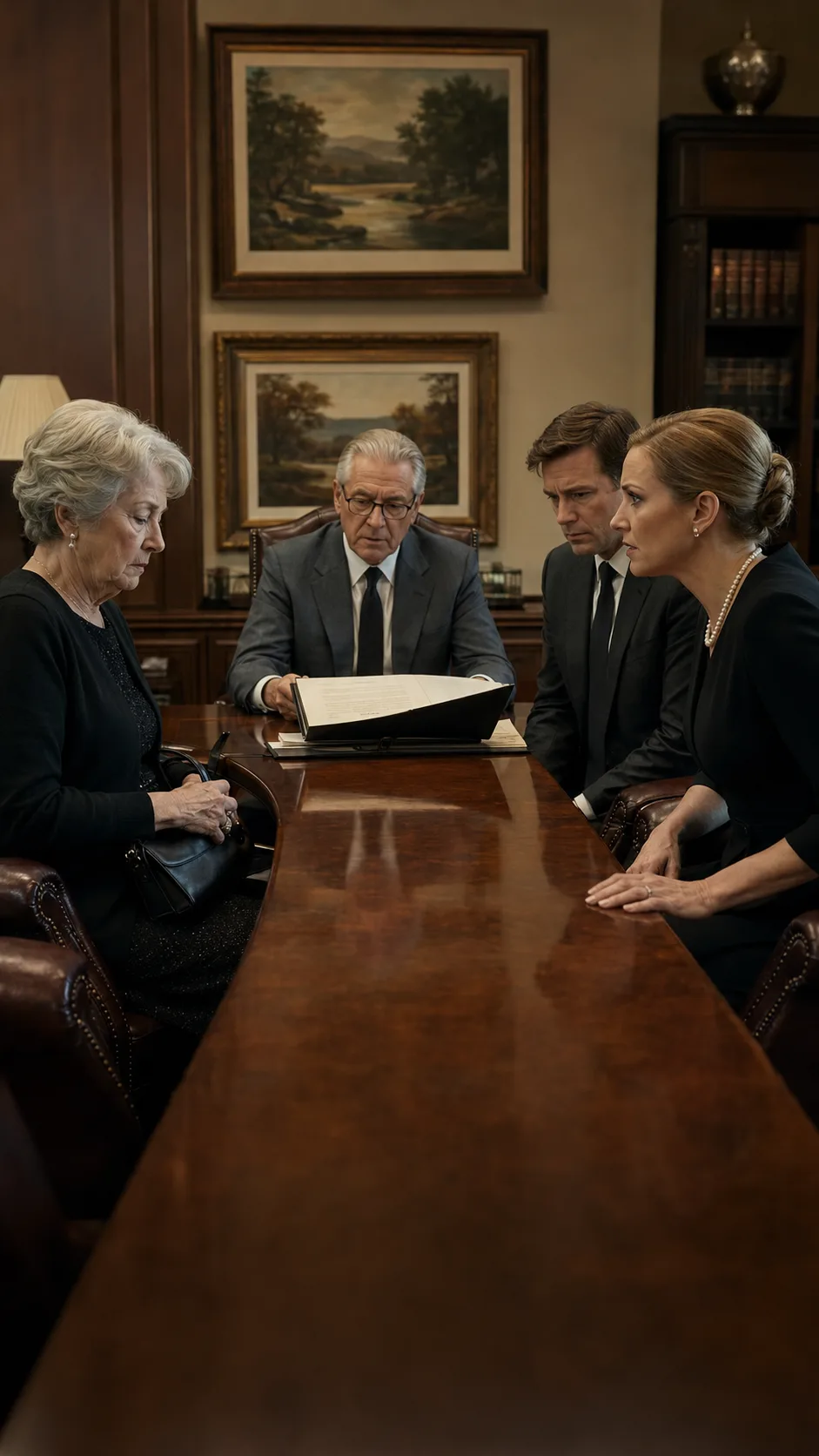
He sat across from me at Margot’s conference table, hands folded, eyes tired.
No Lorraine.
No mother language.
No hallway performance.
Just Daniel.
“I’m sorry,” he said.
I waited.
He swallowed.
“I told myself you left me.”
“I went to help my sister.”
“I know.”
“Do you?”
He looked down.
“I told myself you chose her over me because it made what I did feel less ugly.”
That was honest.
Not enough.
But honest.
He continued.
“My mother kept saying the apartment was the problem. That you held it over me. That I would never feel like a man in a home with someone else’s name on the title.”
“And you believed her.”
“I wanted to.”
That one landed.
Because it was true.
People say I was manipulated when often they mean I accepted the manipulation that flattered me.
Daniel rubbed his hands together.
“I didn’t think of it as taking your home.”
“What did you think it was?”
“Pressure.”
There was the word again.
I nodded slowly.
“Pressure to do what?”
“To come back. To talk. To admit I mattered there.”
I felt something inside me ache.
Not forgiveness.
Grief.
Because if he had said that six weeks earlier, in one honest phone call, maybe there would have been a conversation instead of a building access audit.
“You mattered,” I said. “You just wanted ownership to prove it.”
He closed his eyes.
“Yes.”
I looked at him for a long time.
This man I had married.
This man who knew how I took coffee and also tried to make my absence into abandonment.
This man who had been lonely enough to feel threatened by a deed and entitled enough to change my lock.
“I am not coming back,” I said.
“I know.”
“I don’t trust you.”
“I know.”
“I don’t want your mother in my life.”
He almost smiled, then wisely did not.
“I know.”
“Good.”
There was nothing else to say.
But Daniel surprised me.
He reached into his jacket and pulled out an envelope.
Margot’s posture changed.
He noticed.
“It’s not legal,” he said quickly. “It’s yours.”
He slid it across the table.
Inside was a photograph.
My grandmother’s mug on the balcony, taken early in our marriage. I was in the background, laughing at something, hair messy, wearing Daniel’s old college sweatshirt.
“I found it in my phone,” he said. “I thought you might want it.”
I did.
That irritated me.
“Thank you,” I said.
He nodded.
“I’m sorry about the mug.”
I looked at him.
“The mug?”
His eyes filled.
“For letting her touch the things that made the apartment yours.”
That apology mattered more than the first one.
Because it was specific.
Because it did not ask me to forget.
Because it named the small violation inside the large one.
I kept the photograph.
Not because I wanted Daniel back.
Because there was a version of us once where laughter had been real.
Divorce does not require pretending every good thing was fake.
It only requires admitting the good things did not save the rest.
After the divorce, I changed the apartment slowly.
Not because Lorraine had ruined it forever.
Because I needed to reclaim it by choice, not just restore it to before.
I painted the den a deep blue.
I replaced the chandelier with a modern brass fixture that no lace cover could reasonably survive.
I bought new throw pillows — no words on them.
Ever.
I changed the lock system, though the building had already done it.
I replaced the console table because I could not stop seeing Lorraine’s hand holding my mug beside it.
I kept the hardwood floors.
The green kitchen cabinets.
The balcony basil, still failing, but with admirable persistence.
Rebecca came down again in summer, healthier this time.
We drank wine on the balcony.
She lifted her glass toward the basil.
“To women who come home.”
I raised mine.
“To women who change the codes.”
We laughed.
That evening, I took my grandmother’s mug from the shelf and made tea.
Not coffee.
Tea.
I carried it to the balcony and held it carefully while the city lit up below.
For months, that mug had made me think of Lorraine.
Then Daniel.
Then the hallway.
Then the satin robe.
I hated that.
A stolen moment can attach itself to an object like smoke.
But objects can be washed.
Used.
Loved back into themselves.
I drank tea from the mug every night for a week.
By the eighth night, it was my grandmother’s again.
A year after I came home to Lorraine in my living room, Mr. Alvarez invited me to speak at the building’s annual owners’ meeting.
I said no.
Then he said they had named an access policy after me.
So I said yes out of spite.
The meeting took place in the lounge on the second floor, with folding chairs, bottled water, and residents pretending not to be curious about Unit 12B.
Mr. Alvarez introduced the new policy.
Two-factor confirmation for access additions.
Titleholder verification for ownership-related requests.
Mandatory manager approval for family resident changes.
Audit trail preservation.
Then he nodded toward me.
I stood.
“I will keep this short,” I said.
Several people looked relieved.
“I bought my apartment because I wanted one place where my name on paper meant peace. Last year, someone tried to turn my absence into abandonment and my marriage into permission. This building’s old process made that too easy.”
I looked around the room.
At older women.
Single men.
A young couple.
A widower from 9C who once asked me how to reset his thermostat.
“Access is not a small thing,” I said. “A key is not just a key. A code is not just a code. It is the difference between home and violation. I’m grateful the building understands that now.”
Nobody clapped at first.
Then the widower from 9C did.
Then everyone did.
It was awkward.
But kind.
Afterward, Marco stopped me near the elevator.
“I should have warned you,” he said quietly.
“You tried.”
“I didn’t try hard enough.”
I looked at him.
“You had a job and uncertainty. Lorraine had confidence. Confidence fools people.”
He nodded.
“Still.”
“Yes,” I said. “Still.”
That was enough.
Two years later, I met someone else.
Not dramatically.
Not under chandeliers.
At a hardware store.
His name was Samir. He was trying to choose cabinet hinges and looked so profoundly betrayed by the options that I took pity on him.
“You need soft-close,” I said.
He looked at me.
“Do I?”
“Yes. Unless you enjoy the sound of regret.”
He laughed.
That was the beginning.
Slow.
Careful.
Adult.
The first time he came to 12B for dinner, he stopped at the door and said, “May I come in?”
I almost cried.
Not because the sentence was poetic.
Because it was correct.
He asked before opening cabinets.
Asked before adjusting the thermostat.
Complimented the green kitchen.
Noted the basil was “fighting for its life with dignity.”
When I told him the apartment was mine, he said, “Good.”
Not That must be complicated.
Not I hope I’ll feel welcome.
Not Do you always lead with title documents?
Just good.
Months later, when we got serious, I told him the whole story.
Lorraine.
The robe.
The mug.
The fake email.
The drawer.
The divorce.
He listened without interrupting.
At the end, he said, “I hope you kept the mug.”
“I did.”
“Good.”
That was when I knew I liked him more than was convenient.
I did not marry Samir.
Not for a long time.
Maybe someday.
Maybe not.
What mattered was that when he stayed over, his toothbrush lived in the guest cup because I invited it there, not because he assumed the sink needed him.
That may sound small.
It is not.
Home is made of small permissions honored over time.
Lorraine sent me one letter three years after the divorce.
I almost threw it away.
Then curiosity won.
Claire,
Daniel tells me I should apologize.
I do not agree with everything that happened, but I understand now that the apartment was yours before it was his home. I should not have entered it as if your absence erased you.
I have returned the blue lace cover that was packed with my things by mistake.
Lorraine Whitmore
There was no real apology in it.
Not fully.
But there was one sentence that mattered.
Your absence erased you.
She had almost touched the truth.
The lace cover was folded inside the box.
I stared at it for a long time.
Then I donated it to a community theater costume department.
Somewhere, I hope, it found its true purpose as a haunted tablecloth.
Daniel remarried eventually.
A teacher named Melissa.
I heard through mutual friends that they bought a house together in Decatur.
Both names on the deed.
Good.
I mean that.
Growth should benefit someone.
Even if it arrives too late for you.
The last time I saw him, we were in the lobby of the building. He had come to pick up one final piece of mail that somehow still arrived years later.
He looked older.
Kinder maybe.
Or just less defended.
“Claire,” he said.
“Daniel.”
He looked toward the elevators.
“Place looks the same.”
“It isn’t.”
He smiled sadly.
“No. I guess not.”
Then he handed me an envelope.
“This came to my address by mistake.”
It was from a museum membership I had forgotten to update.
“Thanks.”
He looked like he wanted to say more.
Maybe he did.
Maybe he thought better of it.
Good.
At the door, he turned.
“Do you still have the mug?”
I looked at him.
“Yes.”
He nodded.
“I’m glad.”
Then he left.
That evening, I made coffee in my grandmother’s mug.
Not tea.
Coffee.
Strong.
A little too hot.
I carried it through the apartment, past the den with blue walls, past the brass light fixture, past the console table that had never seen Lorraine’s hand, and onto the balcony.
Atlanta hummed below.
Cars.
Sirens.
Music from somewhere down the block.
The city sounded alive and uninterested in my old heartbreak.
I liked that.
I stood there and thought about the woman I had been that day, rolling two suitcases down the twelfth-floor hallway, exhausted from caring for someone she loved, expecting only to come home.
I wish I could tell her that she would.
Not that day.
Not immediately.
But eventually.
She would come home.
Not to the apartment as it was before.
To something better.
A place with stronger locks.
Clearer records.
Fewer lace threats.
No man in the den mistaking insecurity for ownership.
No mother-in-law drinking from a dead woman’s mug.
Just Claire Bennett in Unit 12B.
Name on title.
Code in hand.
Coffee warm.
Door locked because she chose it.
People sometimes say paperwork is cold.
I disagree.
Paperwork can be love when it protects what you built.
A deed can be a boundary.
An access log can be a witness.
A title can be the quiet voice that says, No, she did not abandon this place just because someone else wanted to stand in it.
Lorraine thought the apartment became hers because she hung lace from my chandelier.
Daniel thought pressure could turn my home into a bargaining chip.
They were both wrong.
A home is not claimed by perfume, pillows, or a robe in the living room.
It is not transferred by a fake email.
It is not surrendered because a woman leaves for six weeks to help her sister survive.
My home was mine because I built the life that paid for it.
Because I read before I signed.
Because my grandmother taught me never to let anyone drink from your cup and call you thirsty.
And because when I opened my door and found another woman pretending to belong there, I did not beg her to leave.
I called security myself.
THE END.
Chapter complete
You have reached the end of this chapter.
Continue reading
A few more worlds to get lost in after this chapter.




