PART 3 — FROM BETRAYED MOTHER TO UNBREAKABLE COMMUNITY LEADER
I was enjoying morning coffee on my back porch when Mr.
Chapter 3
PART 3 — FROM BETRAYED MOTHER TO UNBREAKABLE COMMUNITY LEADER
I was enjoying morning coffee on my back porch when Mr.
Peterson called, laughing so hard he could barely breathe.
“Mrs. Johnson, you need to see this lawsuit Sarah’s family filed. It’s comedy gold.”
“What are they claiming now?”
“That you manipulated your advanced age and fragile emotional state to trick innocent young people into returning stolen property.”
Mr. Peterson’s laughter got louder.
“They’re claiming you have dementia and therefore couldn’t legally reclaim your own house.”
I nearly dropped my coffee mug.
“The same dementia Tommy claimed I had to justify stealing my money?”
“The very same. Their entire defense strategy is that you’re simultaneously too mentally weak to make property decisions and too mentally strong to be held responsible for their prosecution.”
“How wonderfully contradictory.”
“It gets better. They want to reverse our property recovery because you were allegedly under emotional distress when you signed the papers. Apparently, being excluded from family dinners constitutes psychological abuse.”
I set down my
coffee and watched birds playing in my garden fountain.
Such peace. Such simplicity.
Rather like my current mood.
“Mr. Peterson, call Channel 7 News. Schedule an interview for this afternoon.”
“What’s your approach?”
“If they want to claim I’m a weak, confused old woman, let’s give them a demonstration of exactly how weak and confused I am.”
Three hours later, I stood before news cameras wearing my sharpest Sunday dress and a smile that could intimidate bank presidents.
Reporters gathered as I approached their microphones, my posture straight as a flagpole, my voice carrying seventy-three years of life wisdom.
“Ladies and gentlemen, I’m here to address recent claims about my mental fitness made by individuals currently facing criminal charges for elder abuse.”
I pulled out a manila folder thick enough to use as a doorstop.
“These are the financial records I personally compiled over eighteen months documenting systematic theft from
my accounts. Bank statements, property transfers, credit card records, all collected through my allegedly failing mental capacity.”
Chuckles rippled through the press group.
“I want to be clear about something. My son Tommy and his wife Sarah spent three years stealing from my savings, emergency funds, and property ownership. When confronted with proof of their crimes, they didn’t apologize or offer to make things right. Instead, they hired lawyers to attack my mental abilities.”
A reporter raised her hand.
“Mrs. Johnson, how do you respond to claims that you were tricked by outside influences?”
“I respond by pointing out that I raised four children as a single mother, ran a successful catering business for thirty years, and successfully identified and documented financial crimes that police officers called textbook evidence.”
I paused for effect.
“If that’s failing mental capacity, I’d hate to see what they consider sharp thinking.”
More laughter.
“Furthermore,
I’d like to address claims of emotional manipulation. Yes, being excluded from family dinners was painful. Do you know what’s more painful? Learning that your son told neighbors you had dementia to justify stealing your life savings. Learning that emergency money meant for medical bills funded vacation trips. Learning that your own family saw you as an obstacle to their criminal plans.”
The room fell quiet.
“So yes, I was under stress. The stress of discovering that people I loved and trusted were thieves. The stress of realizing I’d raised a son who would lie about my mental health to steal from senior citizens. The stress of watching my reputation being destroyed by people who thought my kindness meant I was stupid.”
I closed the folder with a sharp snap.
“Tommy and Sarah Johnson are criminals who’ve been caught, charged, and held responsible. Their attempt to claim I’m mentally unfit only proves they still don’t understand the most basic lesson. Actions have consequences.”
A reporter called out, “What’s next for your property?”
“Staying exactly where it belongs. In the hands of someone who earned it through honest work and forty years of mortgage payments.”
I gathered my papers.
“Thank you for your time.”
Walking away from those microphones, I felt something I hadn’t experienced since this nightmare began.
Not just vindication, but genuine calm.
The public record was crystal clear. The legal record was unshakable. And my reputation was not only fixed, but stronger than ever.
Mr. Peterson waited by his car, grinning like someone who had just won the lottery.
“That was beautiful, Mrs. Johnson.”
“That was necessary, dear. Now Tommy knows that even from his position of complete shame, he still can’t hurt me.”
My phone buzzed with a text from Jake.
“Grandma, you’re famous on Facebook. Tough grandma fights back is being shared everywhere.”
I smiled, thinking about how perfectly everything had worked out.
Sometimes justice doesn’t just happen quietly.
Sometimes it arrives with camera crews and standing ovations.
Tommy had tried one last desperate attack.
Instead, he’d given me complete and total victory.
My complete transformation reached its peak when I walked into my first community board meeting as the new neighborhood watch coordinator, commanding respect I’d earned through courage and demonstrating strength I’d claimed through truth.
The woman who entered that room was nothing like the one Tommy had dismissed two months earlier.
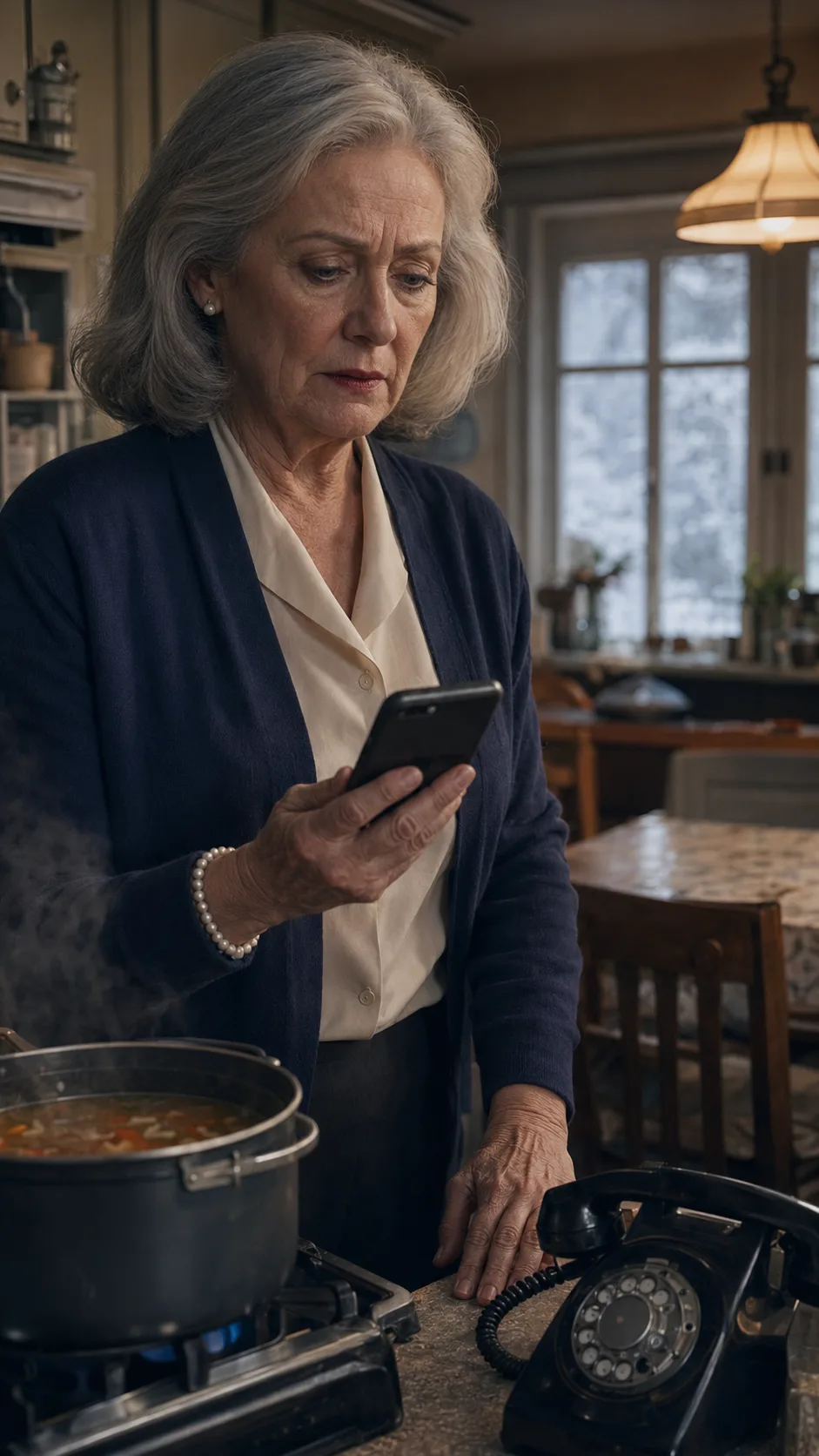
I arrived wearing my mother’s pearl bracelet, the one I’d worn the morning Tommy sent his cruel text, and a navy dress that announced authority before I spoke a word.
My silver hair was styled in a confident cut that showed I meant business.
The woman reflected in the meeting room’s windows was someone I barely recognized.
Shoulders back. Spine straight. Eyes sharp as laser beams.
“Ladies and gentlemen,” I said, taking my seat at the head of the table where community leaders had once dismissed my concerns, “welcome to our new neighborhood watch program.”
The board members, some old neighbors and some new allies carefully chosen by our group, listened with complete attention as I outlined our plan to protect senior citizens from family fraud.
Every person Tommy had lied about would be protected. Every trick he’d used would be documented and prevented. Every senior citizen would know their rights and have people watching out for them.
“Our first month shows remarkable results,” Mr. Peterson reported, reading from official documents that painted a picture of rapid community healing. “Senior safety awareness is at an all-time high. Family fraud reports have increased forty percent as people gain confidence to speak up. And we’ve prevented three attempted scams against elderly residents.”
Board member Mrs. Chen raised her hand.
“Mrs. Johnson, what about Tommy’s criminal trial?”
“Tommy and Sarah face charges for elder abuse, fraud, and theft. Their trial starts next month. I’ll be testifying as the main witness, and our community reputation is stronger than ever. Yesterday, the state attorney general’s office asked permission to use our case as training material for elder abuse prosecutors. The county commissioner wants our neighborhood watch program implemented countywide. Channel 7 News called us a model for senior protection.”
Approving nods circled the table.
These people had watched me systematically rebuild trust, restore community safety, and emerge as a leader worthy of statewide recognition.
The difference between my leadership and Tommy’s lies couldn’t have been more obvious.
“What’s our five-year plan?” asked new board member Mr. Rodriguez, whom I’d recruited specifically for his experience in community organizing.
“Realistic goals include expanding our senior protection network to five neighboring areas, creating educational programs about family fraud, and establishing a legal fund to help other victims fight back.”
I clicked to the next slide in my presentation.
“We’re also launching a scholarship program for young people who want to study elder law, fully funded by recovered stolen money.”
The irony was delicious.
Money Tommy and Sarah had taken from my emergency fund would now educate future lawyers who’d protect other seniors from similar crimes.
“Mrs. Johnson,” asked longtime neighbor Mr. Williams, “how do you feel about your transformation?”
I considered the question carefully, looking around the room at faces that showed genuine respect rather than the polite dismissal I’d endured when Tommy controlled the narrative about my mental health.
“Eight weeks ago, I was told I had dementia, excluded from family gatherings, dismissed as a burden.”
My voice carried across the room with confidence earned through battle.
“Today, I’m coordinator of a countywide senior protection program, a key witness in a criminal case, and apparently something of a local celebrity.”
Laughter filled the room.
“The transformation isn’t just personal. It’s communitywide. Tommy led through lies, theft, and manipulation. I lead through honesty, protection, and earned trust.”
I stood, feeling every inch of my height, every year of my experience, every ounce of authority I’d reclaimed through smart fighting.
“The difference is that when people follow you because of lies, they abandon you when they learn the truth. When they follow you because of respect, they become partners in building something lasting.”
Mr. Peterson nodded approvingly.
“Speaking of partners, we’ve received cooperation requests from eight communities that specifically mentioned your leadership as their reason for wanting our help. Senior participation in community activities is up fifty percent. Isolation reports are down seventy percent. Yesterday, two families who’d been hiding financial abuse came forward asking for help.”
I thought about the woman who had read that heartbreaking text message nine weeks ago.
She had been hurt. Confused. Questioning her own worth.
The woman standing at this table had answers to all those questions and the power to make sure no other senior citizen would face them alone.
“Ladies and gentlemen, this community will never again allow senior citizens to be victimized by people who mistake cruelty for family loyalty or theft for love.”
I gathered my papers with movements that commanded attention.
“We protect our elders through education, support them through community, and prove that doing right isn’t just morally correct. It’s practically effective.”
The applause that followed was something Tommy had never earned.
Not once in all his years of lying to these same neighbors.
The public recognition reached its perfect peak when our neighborhood watch program won the state community service award, with me accepting the honor before an audience that included former doubters who now stood and cheered my complete comeback.
I walked onto the convention center stage wearing the pearl bracelet that had become my symbol of survival and a burgundy dress that announced victory without needing words.
Two months earlier, I had been dismissed as mentally incompetent.
Tonight, I was being celebrated as a model of community courage.
“Ladies and gentlemen,” the presenter announced, “this year’s state community service award goes to the Oak Street Neighborhood Watch, under the inspirational leadership of coordinator Dorothy Johnson, for demonstrating that community protection drives both safety and social connection.”
The audience erupted in cheers as I approached the podium.
In the front row, I spotted Jake beaming with pride, Mr. Peterson recording on his phone, and several reporters who had followed my story from family disgrace to state recognition.
“Thank you,” I said, my voice carrying across the auditorium with confidence earned through struggle. “Four months ago, I discovered that my own family had been lying about my mental health while stealing from my accounts and property. Today, every stolen dollar has been recovered and every lie has been publicly corrected.”
The applause grew louder.
“But this award isn’t just about exposing family fraud. It’s about proving that communities built on truth don’t just survive. They flourish. Since implementing our senior protection program, Oak Street has seen increased neighborhood involvement, reduced isolation among elderly residents, and prevented multiple financial scams against vulnerable families.”
I held up the crystal award, watching light break through its surfaces like hope breaking through darkness.
“I want to share this recognition with every neighbor who chose truth over convenient lies. Every board member who supported protection over politeness. And every senior citizen who found the courage to speak up about abuse.”
The standing ovation lasted four full minutes.
As applause washed over me, I thought about the journey from humiliation to honor, from dismissal to leadership, from victim to champion.
After the ceremony, reporters surrounded me for interviews that would broadcast regionally. A documentary crew requested permission to film our neighborhood watch program. Two book publishers wanted my story. The governor’s office mentioned my name for a statewide senior advocacy position.
“Mrs. Johnson,” asked the state public radio correspondent, “what would you say to other seniors facing similar family fraud?”
“That loyalty to family doesn’t require accepting harmful behavior. Sometimes the most loving thing you can do is hold people responsible for their choices.”
I smiled with satisfaction that felt as warm as summer sunshine.
“Actions have consequences. Always.”
“Do you have any regrets about exposing Tommy’s crimes?”
“My only regret is not acting sooner. Every day I hesitated was another day other seniors might face similar abuse. Another day financial crimes went unanswered. Another day community trust was being damaged by unchallenged lies.”
I paused, choosing my words carefully.
“I regret allowing love to delay justice.”
“What’s next for your neighborhood watch program?”
“Excellence and expansion. We’re training volunteers in twelve new communities, launching educational workshops about senior rights, and creating a hotline for families facing financial abuse.”
I adjusted my mother’s pearl bracelet.
“We’re proving that protection isn’t just the right choice. It’s the effective choice.”
Later that evening, at the celebration dinner in my honor, I received calls from community leaders, elected officials, and senior advocates who had been inspired by my story. The mayor wanted to discuss citywide senior protection initiatives. A state senator invited me to testify before the legislature about elder abuse prevention. The attorney general mentioned my case as a model for prosecution training.
Jake found me on the hotel balcony, looking out at the city lights that sparkled like stars scattered across dark velvet.
“Grandma, you’re inspiring people everywhere.”
“I’m helping people protect themselves, sweetheart. There’s a difference.”
“Are you happy?”
I considered the question while watching traffic flow like rivers of light below us.
Was I happy?
Or was I something more complex?
Satisfied. Purposeful. Complete.
“I’m at peace, Jake. For the first time in years, I’m exactly where I’m supposed to be, doing exactly what I’m meant to do.”
I smiled at this young man who had never doubted my abilities.
“And yes, that makes me deeply happy.”
The irony wasn’t lost on me.
Tommy had tried to destroy my reputation and instead made me more respected than I had ever been.
Sarah had attempted to erase my community standing and instead helped me build something more meaningful than anything I had achieved before.
Sometimes justice doesn’t just restore what was taken.
Sometimes it gives you something better than what you lost.
Tonight, surrounded by recognition I’d earned through bravery, I understood that my greatest victory wasn’t defeating Tommy and Sarah.
It was becoming the woman I was always meant to be.
The new life I built four months later proves that sometimes the best revenge is living so well that your enemies become footnotes.
I sit in my sunroom surrounded by community awards instead of legal documents, helping families instead of fighting criminals, and finally understanding what true strength looks like.
This morning started like every Sunday for the past two months.
Jake arrived at eleven with bagels and orange juice from that little bakery near his college, settling into what had become his regular spot at my kitchen table.
At sixteen, he possesses more integrity than his father ever managed.
Watching him grow into a man of principle has become one of my greatest pleasures.
“Grandma, Mrs. Rodriguez wants to interview you for her thesis about community leadership,” he said, pulling school papers from his backpack. “Also, two more neighborhoods have asked for help starting their own senior protection programs.”
“How many is that this month?”
“Nine. You’re becoming the go-to expert on community safety programs.”
He grinned.
“Who knew exposing your own son’s lies would become a full-time job?”
I laughed, reviewing thank-you letters from seniors whose families we’d helped.
Thirty-seven elderly residents now had legal protection, financial security, and community support.
The money Sarah had used for designer shoes now funded legal aid for vulnerable seniors.
“Speaking of full-time work,” I said, signing certificates for volunteer training graduates, “Mr. Peterson wants to expand our legal clinic. Apparently, families nationwide are requesting the Dorothy Johnson approach to elder protection.”
“Are you interested in traveling, Grandma?”
“At seventy-three, I’ve discovered I have a talent for community organizing. Why waste it?”
My phone buzzed with a text from Mr. Peterson.
“60 Minutes approved the interview. Dorothy Johnson, the grandmother who fought back. Filming starts Tuesday.”
The irony was perfect.
Tommy had tried to make me disappear and instead made me nationally famous.
“Jake, do you ever wonder what your father’s doing now?”
His expression grew thoughtful.
“Actually, I heard from Mom last week. He’s working at a hardware store in the next county. Some kind of stock clerk position.”
He searched for words.
“Smaller. Like he’s gotten physically smaller somehow. And Sarah moved back to her parents’ house with the kids. Apparently, she’s working at a call center now.”
I felt something unexpected.
Not satisfaction, but a kind of peaceful indifference.
These people who had once seemed so important in my life, who had caused such pain and anger, had become background characters in a story that was no longer about them.
“Do you miss them?” Jake asked quietly.
“I miss who I thought they were. The son I believed I’d raised. The family I imagined we could be.”
I set down my letters and looked at this young man who had never let me down.
“But I don’t miss the reality of who they actually were. The lies, the theft, the cruelty disguised as family loyalty.”
The afternoon brought my weekly visit to our community center, where seniors received financial counseling, legal advice, and social support to prevent isolation and abuse.
Today, I was meeting with Elena Vasquez, whose family had tried to force her into signing over her house deed.
“Mrs. Johnson,” Elena said, showing me the legal papers Mr. Peterson had helped her understand, “I want you to know what this program means. Six months ago, I was afraid to answer my own door. Now, I’m helping other grandmothers protect themselves and proving that seniors can be strong and independent.”
“That’s exactly why we exist, dear. To prove that age brings wisdom, not weakness.”
Walking through that building, seeing elderly people of all backgrounds building support networks based on respect rather than exploitation, I understood something profound.
My greatest victory wasn’t stopping Tommy’s behavior.
It was creating something better to replace it.
As evening fell, I returned to my house and called Mr. Peterson to discuss next week’s volunteer training session.
Our neighborhood watch program continued growing, now serving over two hundred families and recognized nationally as a model for community-based elder protection.
“Dorothy,” Mr. Peterson said, “I have news. Tommy called today asking for a meeting.”
“What does he want?”
“To apologize, apparently. To make amends for his behavior and lies.”
I considered this while watching sunset paint my garden golden.
After months of silence, my son wanted reconciliation.
Not because he’d found religion or discovered honesty, but because he had finally realized the cost of his choices.
“What should I tell him?” Mr. Peterson asked.
“Tell him I’m busy building something beautiful. If he wants to be part of something meaningful, he can volunteer at the community center like anyone else.”
I smiled.
“If he demonstrates real change and genuine remorse over time, we might consider giving him a chance to earn forgiveness. And if he doesn’t, then he’ll remain exactly what he chose to become. Irrelevant to my story.”
That night, I sat in my garden with a cup of tea, reading thank-you notes from families whose lives had been transformed by programs funded with recovered stolen money.
In the distance, my neighborhood hummed with the sounds of people living safely and connected to each other.
Beautiful and strong, despite everything that had tried to harm it.
My phone showed twelve missed calls from Tommy.
I deleted them without listening.
Some relationships can be rebuilt through genuine change and earned forgiveness.
Others end when people show you who they really are.
The wisdom is knowing the difference and having the courage to act accordingly.
Tomorrow, I would wake up as Dorothy Johnson, community leader, senior advocate, elder protection expert, and grandmother to an exceptional young man.
Not someone’s dismissed mother.
Not someone’s forgotten neighbor.
But a woman who had built something meaningful from the ashes of betrayal.
Sometimes the best revenge isn’t destroying your enemies.
Sometimes it’s becoming so powerful in doing good that their opinions become meaningless, their actions become powerless, and their absence becomes a blessing rather than a loss.
In the quiet of my new purpose, surrounded by community instead of conflict, I finally understood what true victory looked like.
It looked like peace.
*** THE END.***
Chapter complete
You have reached the end of this chapter.
Continue reading
A few more worlds to get lost in after this chapter.




