PART 3 — THE FORTUNE THEY NEVER SAW COMING
That evening, I logged each moment into my notebook.
Chapter 3
PART 3 — THE FORTUNE THEY NEVER SAW COMING
That evening, I logged each moment into my notebook.
The phrasing Lance used, the expression on Kayla’s face, the exact time and setting. Then I tucked the book away and exhaled.
They were planning, watching, hoping I’d stay where they put me.
But I had moved, and they hadn’t noticed just how far.
It was a Wednesday evening when Kayla announced there would be a dinner that weekend. Just family, she said. Something simple. She wanted to celebrate the baby’s first steps and bring everyone together. She made the announcement while chopping vegetables. Lance sat at the kitchen island scrolling on his phone. Neither looked at me when she said it, but I could tell it was important.
I asked who was coming.
Kayla said her parents, her sister and brother-in-law, a few close friends from her old job. She didn’t say it, but I knew what she meant.
People who mattered.
I nodded and offered to help with
the food. She paused a beat, then said no, she had it all handled.
“Just enjoy yourself,” she added with that smile that never quite reached her eyes.
I went upstairs and sat at the small desk by the window. I opened my notebook and wrote two words.
Dinner setup.
Over the next few days, the house became a flurry of preparation. Groceries doubled. The baby was dressed up for practice photos in the living room. A cleaning service came through and scrubbed the kitchen twice in one morning, but no one asked what I would wear. No one mentioned a seat for me.
On Saturday, I got up early and ironed my slacks, a soft navy sweater. I did my hair slowly, twisting the ends back and pinning them like I used to for church.
I looked at myself in the mirror and whispered, “You’re still here.”
Downstairs, the
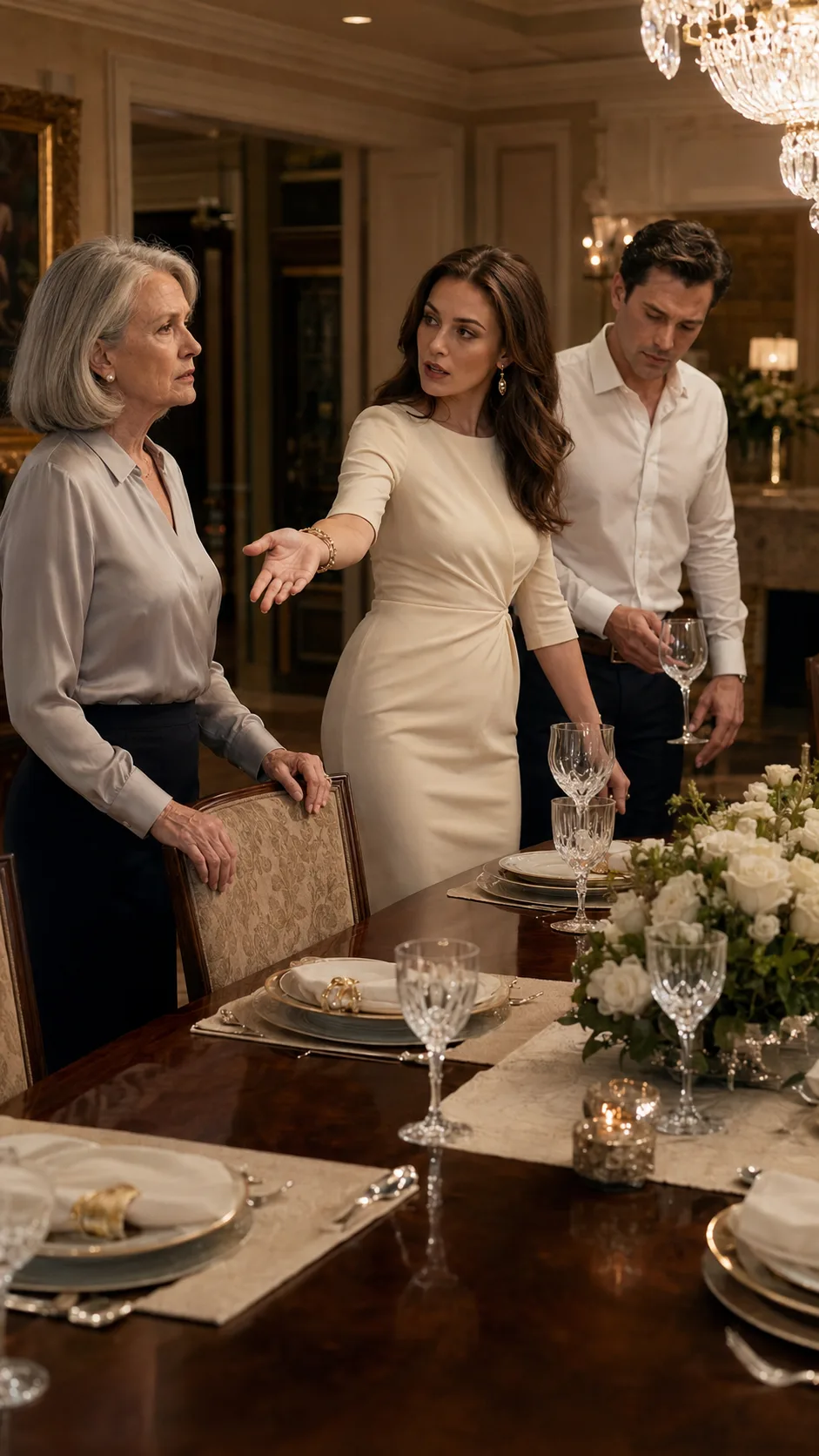
table was already set.
White linen, silver flatware, name cards written in calligraphy.
There wasn’t one for me.
I stood there for a long time before Kayla appeared in the hallway. Her eyes flicked to the empty seat at the end of the table, then to my hands folded neatly in front of me.
“Oh,” she said, tilting her head slightly. “We just thought you might prefer to rest. The baby’s been a lot lately.”
I didn’t answer.
“There’s a plate for you in the kitchen,” she added.
I turned and walked back to the guest room.
I didn’t cry.
I didn’t break anything.
I sat on the edge of the bed and waited, not for an apology. I knew none would come.
Instead, I waited for the moment.
Around 7:30, I heard glasses clinking and laughter rising from the dining room. The sound of forks against porcelain, polite conversation
floating beneath soft music. I walked down the hallway slowly, notebook in one pocket, pen in the other.
In the entryway, I paused, took a breath. Then I walked past the dining room without looking in, into the kitchen and straight to the garage. I opened the side cabinet and pulled out the sealed manila envelope I had hidden behind the emergency flashlights.
The lottery check.
I hadn’t touched it since I brought it home.
I peeled it open now, steady hands, clear breath.
$986,000.
Still folded perfectly.
Still mine.
That night, I didn’t eat the kitchen plate. I sat outside on the back porch with a blanket and a cup of tea, watching stars emerge behind the bare trees. Inside the house, they toasted without me. But I wasn’t grieving that anymore.
I was planning.
Rachel and I had a meeting Monday morning. A real estate broker would be there. We were going to talk about options, about exits, about beginnings.
They had their dinner, but I still had my seat.
And it was going somewhere they’d never planned.
Monday morning came with a thin frost on the car windows and silence in the kitchen. Kayla had already left for work and Lance was upstairs with the baby. I stood in front of the mirror for a long time making sure my coat was pressed, my scarf folded neatly. I didn’t wear makeup often anymore, but I dabbed on a bit of color, just enough to make my eyes feel awake.
I took the manila envelope with the check and placed it carefully into my tote.
Then I pulled out a second envelope, this one thinner.
Inside it was a single typed page folded once. That was the letter. Not a goodbye, not an explanation, just a clear outline of decisions made. Financial boundaries, legal confirmations, a gentle but firm reminder of what I had chosen, and a line at the bottom that said, I will no longer be residing here as of today.
I left it on the hallway table, right next to the framed photo of Lance holding the baby.
At 9:00 a.m., Rachel met me outside the cafe near the courthouse. She was already seated, two cups of tea steaming between us. She didn’t say anything at first, just handed me a folder.
Inside was everything. A finalized transfer of funds, a new mailing address, a notarized lease for a furnished apartment just outside of town, clean and small, with a garden and wide windows, and the paperwork for the foundation I had asked about.
She smiled when I opened that part.
“You’ll be the founding sponsor,” she said. “We’ve already drafted the mission statement, supporting women over 60 who want to reenter the workforce or start their own ventures.”
My name was printed right at the top.
That afternoon, I picked up the keys.
The apartment wasn’t much. One bedroom, simple kitchen, a small reading nook with a bay window, but it was mine.
The next day, I returned to Kayla and Lance’s house to collect the rest of my things. I didn’t ring the bell. I still had my copy of the key. When I walked in, the letter was still there on the table, untouched.
But the photo beside it was gone.
I gathered my belongings quietly. Mostly books, a few scarves, my sewing kit, some framed photographs from years past. I left the guest room exactly as I had found it.
Before I stepped out the door for the last time, I turned and looked into the living room. The sunlight had shifted, catching on the glass of the baby’s toys. The silence in the house felt heavier than usual.
It no longer belonged to me, and I was finally at peace with that.
That evening, Rachel called and said the press release had gone out. The foundation would have a quiet launch in two weeks, hosted at the local community center. Nothing grand, just a tea gathering, a few small speeches and a symbolic check handoff.
I told her I’d be there.
The day after, Lance called. I didn’t answer. He didn’t leave a message.
Later, I listened to it once through the voicemail system. His voice was tight, clipped. He said he wished I had told him sooner, that Kayla was confused and upset, that they would have worked something out.
But we both knew that wasn’t true.
And more importantly, it didn’t matter anymore.
The choices had been made.
The silence between us now felt cleaner than the words we had exchanged in months.
I sat by the window of my new place, watching the sun slip down behind the hill. The check framed on the wall behind me. Not to flaunt, but to remember where I had been and how far I had quietly come.
It took a week before Kayla showed up at my apartment. I saw her through the lace curtain before she rang the bell. She wasn’t carrying anything. No apology cake, no baby, just a heavy purse slung over her shoulder and that same tight expression she wore when she wanted to control the outcome before it even began.
I opened the door, said nothing, and stepped aside.
She entered like she owned the place, her eyes darting around, taking in the plants on the windowsill, the books stacked by the couch, the framed check on the shelf. Her shoulders tensed at that last one.
I didn’t offer her tea.
She didn’t sit.
“I came to talk,” she said, voice soft but clipped, “about the foundation and how this sudden move of yours is affecting the family.”
I nodded once and stayed quiet.
She filled the silence quickly.
“We were caught off guard. Lance especially. You should have told us about the money, about your plans, about the apartment.”
Still, I said nothing.
She pressed on.
“You disappeared, Norma. That’s not how families work. You left a note like we were strangers.”
I met her eyes and said, “Because you treated me like one.”
Her mouth opened, then closed. She shifted her weight. The facade cracked just enough to show confusion underneath.
She tried again.
“I’m not here to argue, but we’re your family. We deserve a say in all this, what happens next, how things are handled.”
I walked over to the bookshelf and pulled out a folder. I handed it to her.
Inside was a copy of the foundation’s charter, the mission statement, the bank’s verification of my donation, and a formal notice revoking any financial association between myself and the household.
Her jaw tightened. She flipped through it fast, as if speed would change the facts.
When she looked up again, the control was gone from her face. In its place was something smaller, something I almost mistook for fear.
“I never meant for things to get so distant,” she said.
I believed her, but intentions didn’t undo patterns.
“I’m not angry,” I told her. “But I’m done being managed.”
She stood in silence for a long moment, then slowly folded the folder closed. Before leaving, she turned at the door.
“People will talk,” she said.
I gave a half smile.
“Let them.”
She left quietly.
The room held her absence for a while. I didn’t rush to fill it. I let the stillness settle, the kind that comes when truth has finally been spoken aloud.
That evening, I took a slow walk around the neighborhood. The trees had begun to bud. Early signs of spring trying to push through the last grip of cold. I passed two older women trimming a garden. They waved. I waved back.
At home, I watered the plants, set out the documents Rachel had prepared for the next phase of the foundation. A scholarship for single grandmothers, a mentoring circle for women over 60, the kind of work I had once dreamed of doing with my family.
Now I would do it without them, not to punish, but to live.
That night I sat by the window and watched the apartment complex across the street go dark window by window. I held the soft edge of the teacup in my hands and felt no weight of regret. Kayla had come to make her last play, but she was too late.
The voice in the room now was mine. Clear, steady, uninterrupted, and finally heard.
The launch event took place on a Sunday afternoon. No balloons, no press, just a quiet room at the community center with blue padded chairs arranged in a circle and a folding table in the corner where someone had laid out tea cookies and a bowl of lemons.
I arrived early. Rachel was already there smoothing the edge of a poster board with the foundation’s name across the top. It looked simple, honest, not flashy or polished, but it carried weight.
A few women arrived early. One wore a faded denim jacket and walked with a cane. Another carried a notebook clutched tightly to her chest. Each of them paused at the door before entering, as if they weren’t sure this space really included them.
It did.
One by one, the chairs filled.
There was no microphone, no big speech, just me.
I stood and spoke about beginnings, about being overlooked, about how it feels to disappear inside your own family and forget what your name sounds like when you say it for yourself.
I didn’t name names. I didn’t recount the check or the apartment or Kayla. I talked about dignity, about how some choices can only be made once you stop asking for permission to be seen.
When I sat down, there was no applause, just nods, soft exhales, a few quiet tears from women who had been waiting a long time to feel that someone else understood.
Afterward, one woman came up to me. Her hands were rough and warm.
“I thought I came here for information,” she said, “but maybe I came here to remember myself.”
That night, I sat in my new apartment with the sliding door open to let in the early spring air. The check was still on the shelf, but it felt less important now.
I thought about Lance. He hadn’t called again.
I thought about Kayla. I doubted she had told him everything.
I thought about the baby, about whether one day he’d wonder where the woman from the guest room had gone, and whether he’d ever learn what she built after leaving.
But I didn’t linger there.
Instead, I made a cup of tea, wrote notes from the meeting, logged the women’s names, their needs, their ideas. We would start small, resume writing workshops, legal aid referrals, a potluck once a month. It wasn’t grand, but it was real, and it was mine.
Outside, a dog barked in the distance. The street lamp flickered on. Somewhere nearby, someone laughed loud and unrestrained.
I didn’t feel lonely. For the first time in years, I felt surrounded by something solid. Not people who needed me as a placeholder, but people who saw me whole.
And when I went to bed that night, I slept through until morning. No dreams of empty chairs, no echo of doors closing, only quiet, and a growing sense that maybe, just maybe, this life was finally mine to shape.
Spring deepened. The days grew longer, softer. My garden boxes started showing green tips where I planted lavender and basil. The air carried that kind of promise only early April can hold, quiet, but full.
The foundation was growing. Two more women joined the circle. One had just left her daughter’s house after years of being treated like a burden. Another had walked out of a long, silent marriage with nothing but a suitcase and her name.
We sat around the same blue chairs, shared tea, shared silence.
Sometimes laughter, too.
I didn’t need to lead. I just needed to listen. And in listening, I found pieces of myself I didn’t know had been missing.
One afternoon, I received a small envelope in the mail. No return address.
Inside was a picture of the baby, a year old now, standing unsteadily smiling with all his teeth.
I touched the corner of the photograph.
My name wasn’t written anywhere, but I knew who had sent it.
I didn’t cry. I didn’t call.
I placed the photo inside a book of pressed flowers and let it be what it was. A thread, fragile, uncertain, but maybe still connected.
I no longer lived in the past. I didn’t carry resentment like luggage, but I remembered. And I chose each day to let that remembering guide me toward peace. Not revenge, not silence either, just the kind of clarity that comes from walking away with your name still intact.
Every morning, I opened the window, let the air in, listened for the world beyond the life I left. And I never looked back with regret, only with the quiet strength of someone who finally stood up, not for a fight, but for herself. If you’ve ever felt invisible in your own family or like your worth was decided by someone else, this story might have echoed something inside you. If you’re still in the middle of your own silence, I hope you know that peace doesn’t always come from being heard. Sometimes it begins the moment you hear your own voice clearly again.
THE END.
Chapter complete
You have reached the end of this chapter.
Continue reading
A few more worlds to get lost in after this chapter.




